RMIT maps out a more flexible future for its campuses with new Living Places Plan
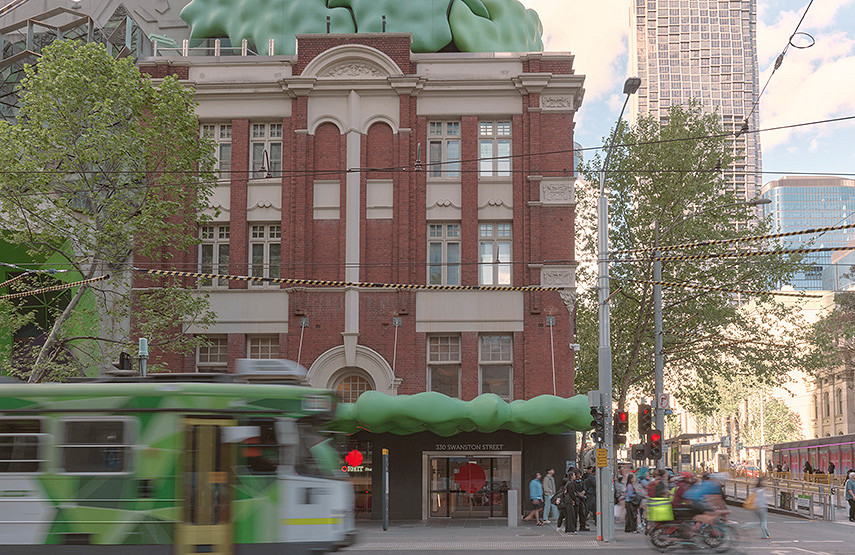
RMIT University has launched a new long-term framework to guide how it evolves its campuses, setting out a broader vision for the future of its spaces at a time when the institution is thinking more deeply about its place in Melbourne and the communities around it.
Unveiled on April 23, the university’s new Living Places Plan is being pitched as a different kind of campus strategy, less a fixed master plan than a more flexible framework to guide decisions about property, public space and the student experience over time.
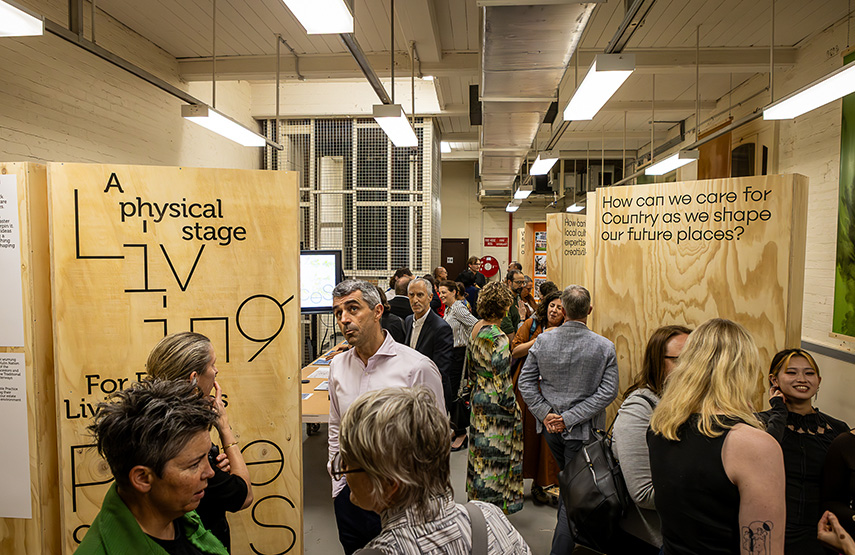
The launch was held through what RMIT called the Living Places Exchange, an immersive exhibition designed to bring the strategy to life through displays, projects and interactive installations. The event was hosted by chief operating officer and vice-president Fiona Notley and attended by councillors, City of Melbourne representatives and other strategic partners.
The significance of the plan lies not only in the projects it may shape, but in the fact that it marks the first time RMIT has tried to formally articulate a long-term, university-wide approach to “property and place” in this way.
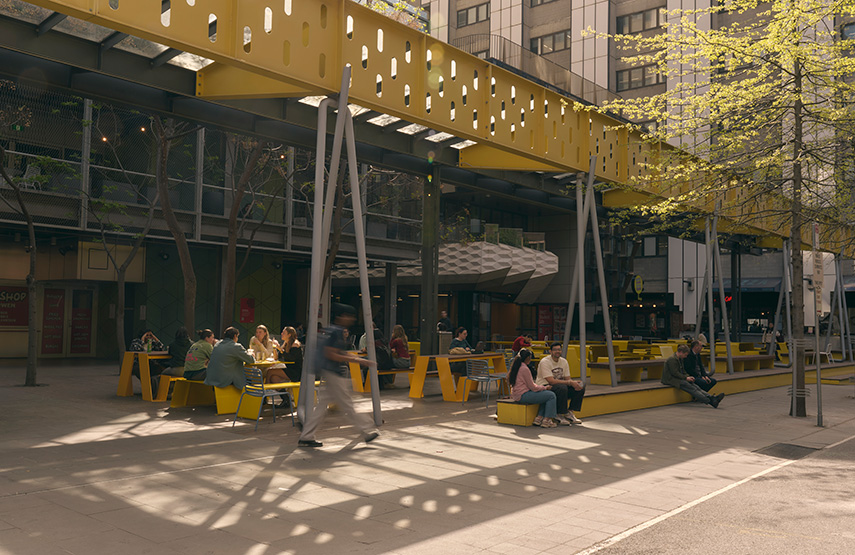
RMIT’s estate is vast. Across its Melbourne campuses in the city, Brunswick and Bundoora, as well as other sites, the university controls more than 67 hectares of land and close to 500,000 square metres of university-owned space, spread across 110 buildings. Its Property Services Group manages a $3.3 billion portfolio, with an operating budget of more than $80 million and more than $100 million a year in prospective capital works across Melbourne and at its three campuses in Vietnam in coming years.
That scale helps explain why the university sees the need for a broader framework.
Executive director of property services Seamus McCartney said the plan was intended to help RMIT respond to a period of rapid change in the tertiary sector and the city more broadly.
“This is unlike anything that we would see for a traditional university master plan,” he said.

It is not a fixed blueprint for a single future – it’s a living framework for the future we know we’ll need to adapt to.
He said pressures ranging from sector uncertainty and affordability challenges to digital transformation, AI and climate imperatives meant universities could no longer rely on rigid long-term planning assumptions.
The Living Places Plan is built around four core goals.
The first is Country, Place and Identity, which seeks to celebrate First Peoples culture and embed Indigenous knowledge in how RMIT designs, uses and cares for its spaces. The university says this will involve working more closely with Traditional Owner groups and exploring place naming and other initiatives that deepen the identity of campus environments.
The second goal, "Community, Connection and Experience", focuses on making RMIT’s spaces more welcoming, inclusive and socially connected. One example highlighted at the launch was the Frugal Canteen Festival, part of the university’s 2025 North Activation Challenge, which tackled food insecurity through community-led food initiatives and affordable meals.
The third, "Applied Innovation and Knowledge", reflects RMIT’s longstanding practical and industry-linked approach to education. The idea is that campuses should not only house learning, but actively enable it through spaces that support collaboration, experimentation and applied problem-solving.
The fourth, "Sustainability and Regenerative Futures", points to the university’s desire to make its campuses more adaptable and environmentally responsive, including through ideas such as retrofitting, flexible solar systems and more nature-based approaches to design.
RMIT Vice-Chancellor Professor Alec Cameron said the university had always been shaped by its relationship to place. Since its first classes in 1887, he said, RMIT had been deeply connected to the city and surrounding communities, and that connection needed to be renewed for a changing era.
The timing of the plan is notable given the broader planning conversations already surrounding RMIT’s role in the inner north.
As Inner City News reported last year, the university has been pressing the City of Melbourne to better recognise its landholdings and long-term ambitions in Carlton, where heritage fabric and low-rise neighbourhood character sit alongside RMIT’s desire to modernise and expand its education environment. That debate emerged through the now-paused review of the council’s Municipal Planning Strategy, with RMIT arguing that its future growth could be constrained if planning policy did not better reflect its strategic role.
The new Living Places Plan does not directly resolve those planning tensions, nor does it set out detailed development proposals. But it does provide a clearer picture of how RMIT sees its campuses evolving and why it believes flexibility matters.
For nearby communities, that may be both reassuring and open-ended. The plan speaks repeatedly about inclusiveness, connection and community benefit, but it also reinforces that RMIT intends to keep reshaping the physical environment it occupies in order to remain competitive and contemporary.
In its latest column, the Carlton Residents' Association said limits needed to be placed on tertiary growth in the area as part of the Municipal Planning Strategy.
In noting that the strategy "proposes changes to encourage tertiary education and knowledge and innovation in Carlton east of Swanston St", it had "submitted an objection noting that RMIT should be confined to the Swanston, Queensberry, Lygon and Victoria streets area and Melbourne University to the Swanston, Elgin, Cardigan and Grattan streets area."
"A Design and Development Overlay should be prepared to set development forms including maximum heights and heritage protection for the two areas," it added.
Traceable master plans often focus on buildings. RMIT’s new language is broader. It is talking about place, culture, sustainability and lived experience, with a framework designed to evolve as the university and the city change around it.
What that means in practical built-form terms will likely become clearer only over time. For now, the message from RMIT is that its campuses are no longer being thought of simply as a collection of teaching buildings, but as living places that should adapt with the times. •
Related Articles
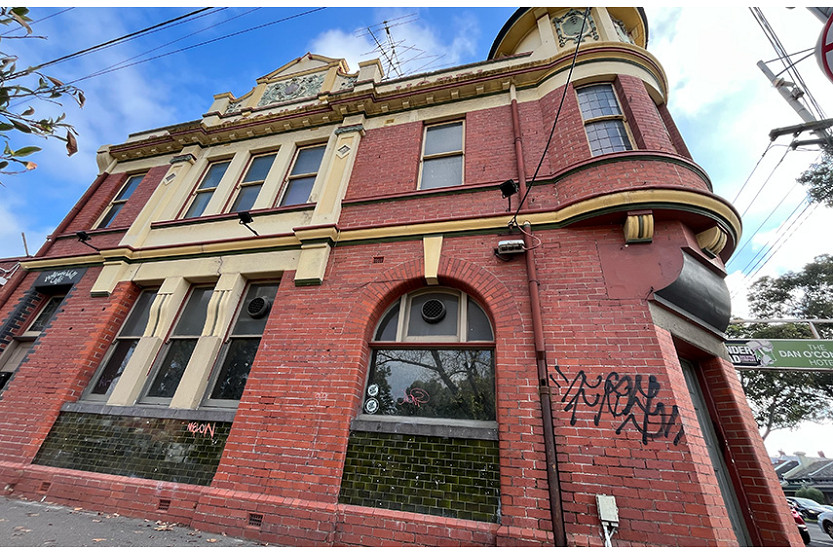
Carlton’s Dan O’Connell hits the market
As Inner City News foreshadowed last month, Carlton’s iconic Dan O’Connell Hotel is back on the market – for sale or for rent – with real estate agents listing the landmark building on Friday, July 31.
Read More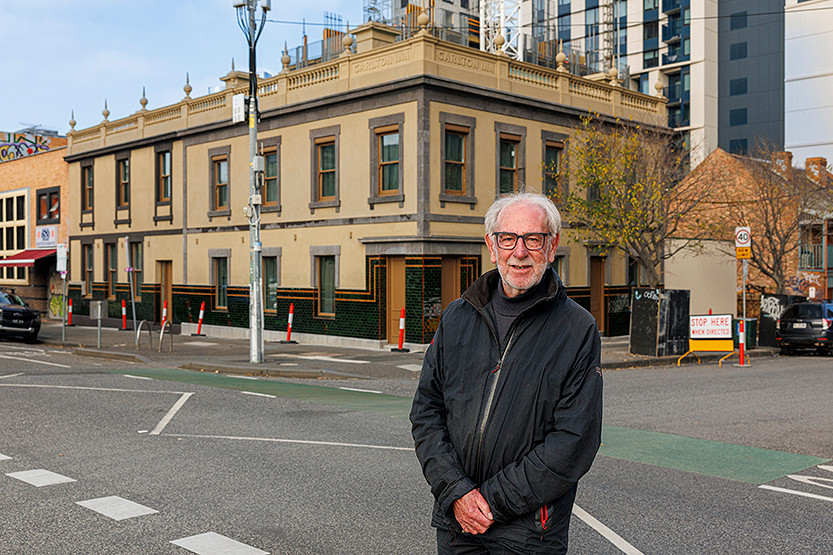
Rebuilt Corkman meets cautious approval
The rebuilt Corkman Irish hotel, revealed when its scaffolding was removed in mid-June, has been met with cautious approval by the Royal Historical Society of Victoria (RHSV) despite the new building’s concrete slab walls.
Read More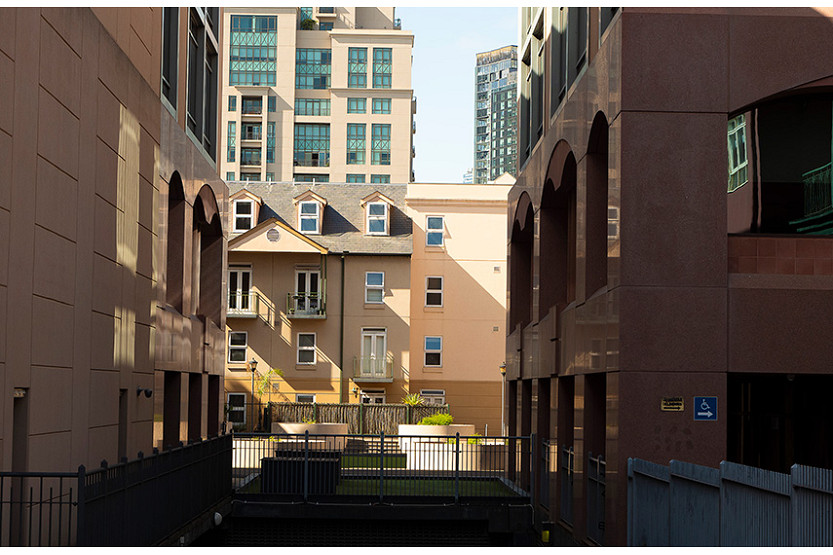
East Melbourne rentals fall short: new report
Research from La Trobe University has found rental properties in East Melbourne ranked among the lowest in Victoria for compliance with minimum standards.
Read More
Naughtons to toast 10 years under its current custodians
Pro-Palestine protesters challenge council on free speech amid Carlton meeting room cancellation
 Download the Latest Edition