Rebuilt Corkman meets cautious approval
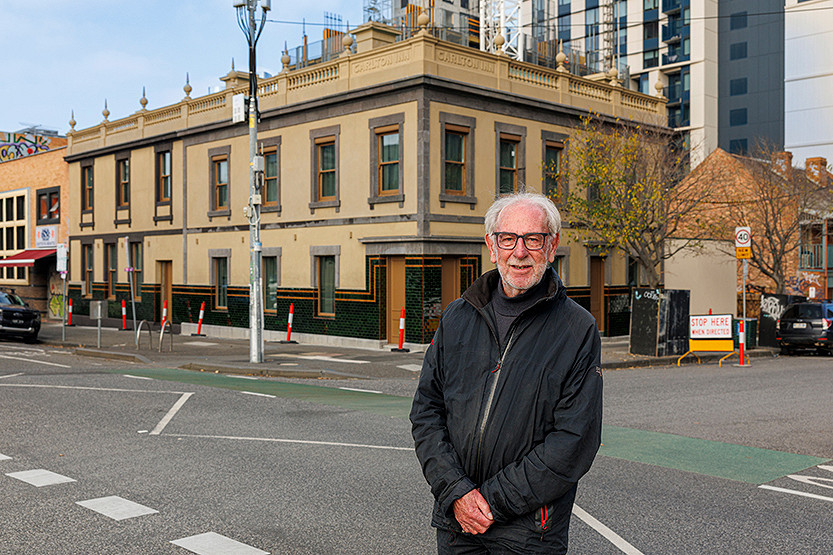
The rebuilt Corkman Irish hotel, revealed when its scaffolding was removed in mid-June, has been met with cautious approval by the Royal Historical Society of Victoria (RHSV) despite the new building’s concrete slab walls.
The original 160-year-old pub, on the corner of Leicester and Pelham streets, was infamously illegally knocked down in 2016 by developers Raman Shaqiri and Stefce Kutlesovski, who had bought it for $4 .76 million and planned to capitalise on the site.
Subsequent legal action saw the pair fined more than $1 million for the demolition and jailed for 30 days for contempt after they failed to clean up the site and take steps to convert it into a temporary park as ordered by VCAT.
With legal action taken by the then-Minister for Planning Richard Wynne with the City of Melbourne and, separately, two angry former pub patrons and students at the nearby law school, Tim Staindl and Duncan Wallace, the developers were ultimately ordered to rebuild the form of the 1857 hotel.
Back in 2016 the Royal Historical Society of Victoria had joined the widespread condemnation of the demolition, its president Professor Don Garden OAM expressing dismay and anger at the developers’ disregard for the building’s heritage and architectural values, for community views and the planning process.
Built in 1857, the Corkman or Carlton Inn was one of the oldest buildings in Carlton, the professor said, and “a classic example of gold-rush era Victorian construction”.
The society called on the Victorian government to “vigorously pursue penalties, action and redress” that would send a clear message on the value of Victoria’s cultural heritage.
A decade later, RHSV’s heritage committee chair Ian Wight said the process since had been very long and drawn out and should never have come to the current situation.
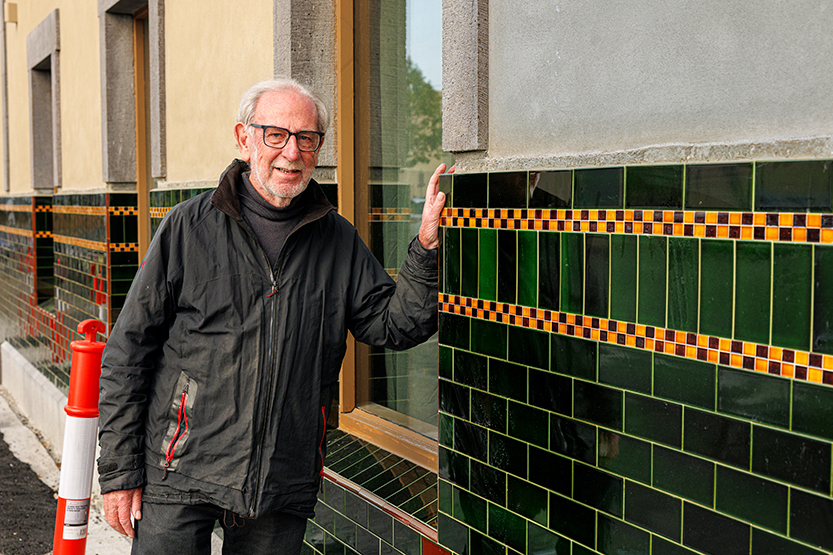
Nevertheless, he was “reasonably pleased” with the replacement building so far.
While he had been concerned its tilt slab construction would give the façade “a very pasted on appearance” a sense of depth had been achieved on the windows and door openings, which were edged with bluestone, he said.
“Would it be better if it'd been done in bricks and mortar? Yes, probably, but I think there has been a reasonable effort made to get some of the detailing right, and I think the overall impression is quite good,” he said.
The heritage expert admitted to being very impressed with the building’s external tiles, the interwar era of which reflected the fact that the pub had been reproduced to its state at the time it was demolished rather than its original form.
However, photos of its multi-storey empty interior were “a bit concerning”.
“We don’t know what’s going to happen in that big empty box,” he said.
The project’s heritage architect John Briggs suggested the building’s “modern structural system” offered the benefit of “significant flexibility internally”, which would hopefully be useful to hospitality operators.
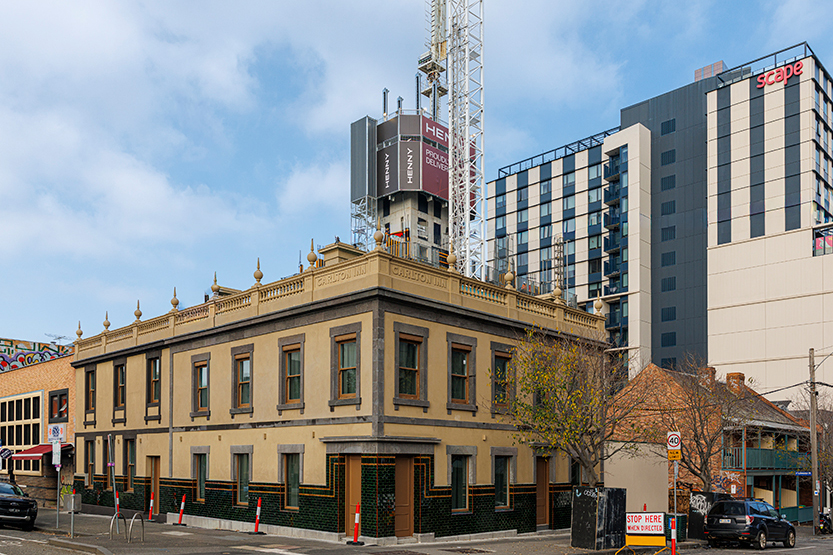
Mr Briggs was very happy with the efforts of the tile manufacturer, who had produced “luscious” hand-glazed tiles, the colouring of which involved some research and “poetic licence” given those on the pub in 2016 had been painted over.
He was also pleased with the stonemasons, renderers and window joiner who worked on the re-creation, and the dedication of “Ray” Shaqiri, who had become personally involved.
The architect was glad also that the result “seemed to be appreciated”.
“There remains some debate among heritage circles as to whether reconstruction – even if authentic to the original – has legitimacy,” he told Inner City News.
“I am confident that it does, and that the heritage overlay that applies remains justified, despite the wrinkle that now exists in the history of this site.”
Mr Briggs said he considered the “entertainment” value of the project to be “the silver lining that [could] come out of bad decisions” that were made. •
Related Articles
Flower show extension sparks fresh Carlton Gardens concerns
A decision to extend the Melbourne International Flower and Garden Show’s licence in Carlton Gardens until 2029 has reignited concerns about community consultation and the long-term protection of the World Heritage-listed precinct.
Read More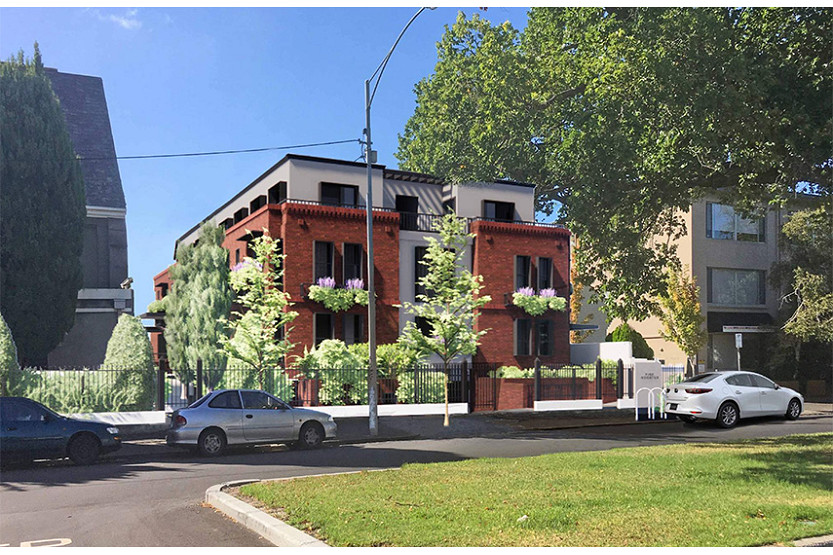
Council backs St Nicholas Church redevelopment in East Melbourne
The City of Melbourne has approved a long-running planning application for St Nicholas Antiochian Orthodox Church in East Melbourne, giving the green light to a heritage-sensitive redevelopment.
Read More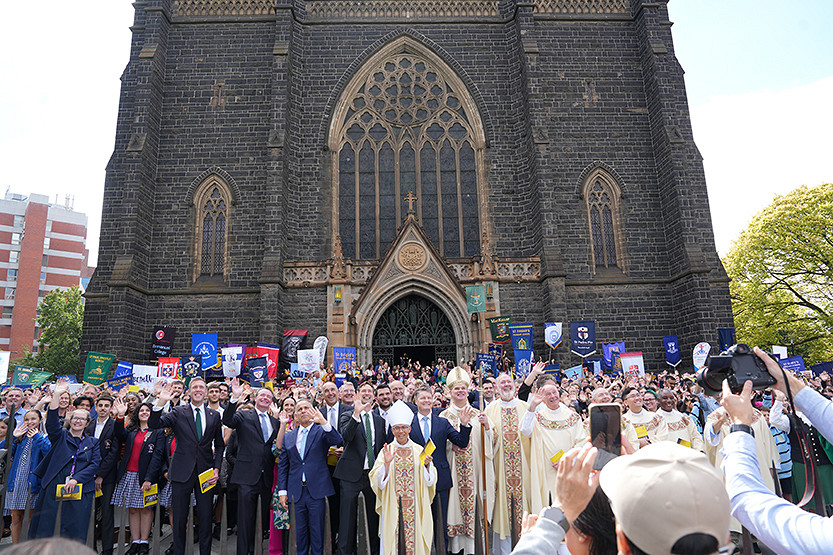
St Patrick’s Cathedral renewal project launched
The Archbishop of Melbourne has launched a $190 million project to repair and renew St Patrick’s Cathedral and “reimagine” its precinct, with an appeal to parishioners and other potential donors to “be part of the vision”.
Read More
Farewell Inner City News – a short but meaningful chapter
Naughtons to toast 10 years under its current custodians
 Download the Latest Edition