Expansion of council’s Community Safety Officer program contested
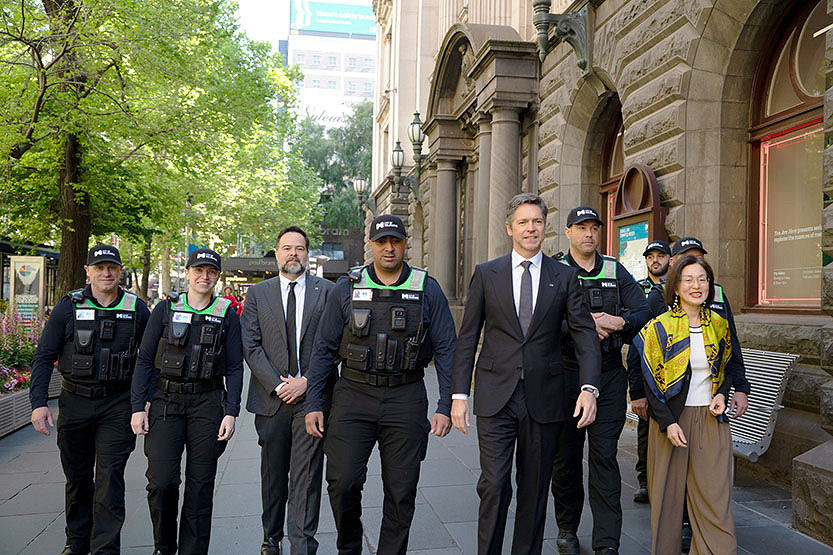
The City of Melbourne’s allocation of millions of dollars to put council-employed community safety officers on the streets has been met with significant opposition.
Greens councillor Dr Olivia Ball recently voted against the council’s 2026-27 budget on the grounds of the allocation, which will see a doubling of the number of officers employed to tackle antisocial behaviour.
The nearly $4 million price tag for the council’s community safety program, which began at the end of October last year, includes $1.7 million to increase the number of community safety officers (CSOs) from 11 to 22.
Up to 150 cameras are also set to be added to the Safe City CCTV network with $320,000 allocated for round-the-clock monitoring of the system.
According to the council, the role of the CSOs, who operate seven days a week across the CBD and inner-city areas, is to: “address issues which impact safety and the perception of safety”; respond to antisocial behaviour using de-escalation and negotiation techniques”; act to enforce local laws and specific state laws; provide welfare checks and support service referrals; and issue directions or infringement notices on matters affecting community safety until police arrive.
A council review of the program’s initial six months found that officers had recorded more than 50 engagements a day, with the vast majority described as constructive or supportive and less than three per cent negative.
This showed the program functioned “primarily as a support, connection and prevention role, rather than an enforcement mechanism,” the report said.
City of Melbourne general manager of infrastructure and amenity Rick Kwasek told councillors the program, which was currently being reviewed by human rights experts, was “running successfully to date” as far as staff were concerned.
While Cr Dr Ball acknowledged the City had received 52 survey responses supporting the CSO program, she pointed to a recently-submitted petition signed by 966 people calling for an end to it.
Councillors had heard “a chorus of voices” speak out against the officers at a May 12 public budget session, she said, suggesting that if voices in such numbers had come from East Melbourne instead of the homelessness sector, their demands wouldn’t have “fallen on deaf ears”.
The Greens councillor reiterated some of the arguments made at the May 12 meeting, including “red flags” raised by Inner Melbourne Community Legal.
The IMCL’s Shifrah Blustein had described the City’s budget as “sacrific[ing] kindness for an optics of safety”.
The CSO program “duplicates the doubled police presence in the CBD,” she said, and was “ineffective, wasteful, and legally risky” with the council’s blurred
lines between support and enforcement roles … very problematic”.
“Without clearly lawful authority, council risks civil claims, including torts of false imprisonment, assault and battery, breaches of human rights, negligence, and duty of care issues and discrimination claims,” she said.
CSOs could face personal as well as criminal and civil action and if a member of the community was harmed by a CSO’s actions, the council could be exposed to significant damages.
Pat Chiappalone, from Homeless Persons Union Victoria, labelled the program “disempowering” and “informed by bureaucrats”.
“It has nothing to do with delivering a health and wellbeing service response. It is a strategy based on fault and a false sense of security, rather than generally building a participatory and inclusive community from the bottom up,” he said.
Like the dozen or so public contributors at the earlier meeting, Cr Dr Ball urged councillors on May 26 to instead channel money into homelessness support.
“Now is the time to end this trial and spend that money instead to do our utmost to solve homelessness,” she said.
Aside from Cr Owen Guest, who abstained from voting on transparency grounds, the remaining councillors – Griffiths, Le Liu, Camillo, Campbell, Scott, Liu, Rowse, Louey and Reece – voted in favour of the budget. •
Related Articles
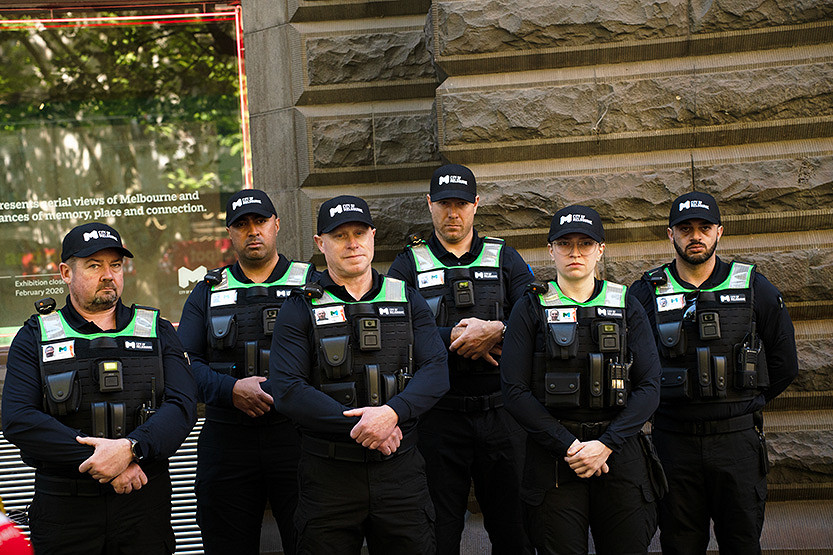
East Melbourne welcomes council’s new safety officers as early patrols deliver results
East Melbourne residents have thrown their support behind the City of Melbourne’s rollout of Community Safety Officers (CSOs), with early patrols already preventing crime and assisting vulnerable people in the neighbourhood.
Read More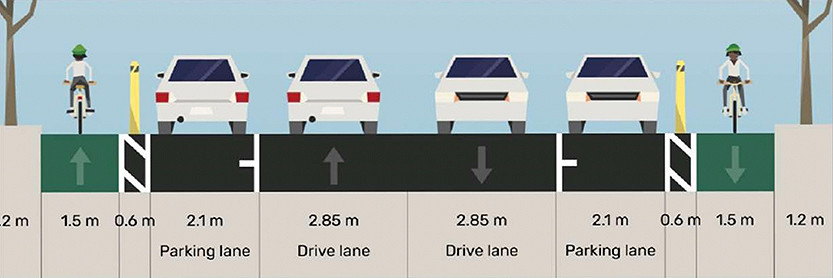
Yarra bike lane decision sparks backlash over safety and governance
The City of Yarra’s decision to narrow Elizabeth St’s bike lanes in Richmond has reignited tensions between councillors, cycling advocates and the state government, with critics warning the move undermines safety on one of Melbourne’s key cycling corridors.
Read More
Da Guido La Pasta enters its next chapter
Infrastructure plan puts focus on Carlton, Parkville and East Melbourne
 Download the Latest Edition