EMERGENCE(Y) at Science Gallery explores survival in a changing world
The latest exhibition at the University of Melbourne’s Science Gallery will explore how humans, ecosystems and technologies might survive and adapt in a rapidly changing world.
Opening on June 6 and running until December 5, EMERGENCE(Y) examines ecological collapse, rapid digitisation and social upheaval, while asking how we might endure, and even thrive, amid ongoing transformation.
The exhibition is the newest offering in Science Gallery Melbourne’s annual program, which explores the intersection of art and science. This year’s show will feature works ranging from coral soundscapes that may help restore damaged reefs to AI-driven political experiments.
Tilly Boleyn, head curator at Science Gallery Melbourne, said the exhibition highlighted adaptation as both a necessity and an act of creativity.
“EMERGENCE(Y) serves as a profound reminder that adaptation is both a biological necessity and a creative endeavour,” she said.
This exhibition invites us to explore the interconnectedness of all life and imagine how we might thrive collectively in a rapidly evolving world.
One of the centrepieces of the exhibition is a new commission by renowned Australian artist Patricia Piccinini. The work follows a year-long residency with Science Gallery Melbourne, during which Piccinini spent time in stem cell research laboratories at the Murdoch Children’s Research Institute. With the new sculpture, she revisits her seminal early work Still Life with Stem Cells on its 25th anniversary.
Other featured works include a flourishing vertical farm that will produce fresh food harvested on site. Created by Greenspace in collaboration with researchers from the Faculty of Engineering and Information Technology, the installation aims to show how sustainable food systems can be integrated into urban life.
Australian designer and academic Alia Parker will also present a collection of fire-resistant, non-combustible garments made from a composite of mushroom mycelium and post-consumer cotton textile waste.
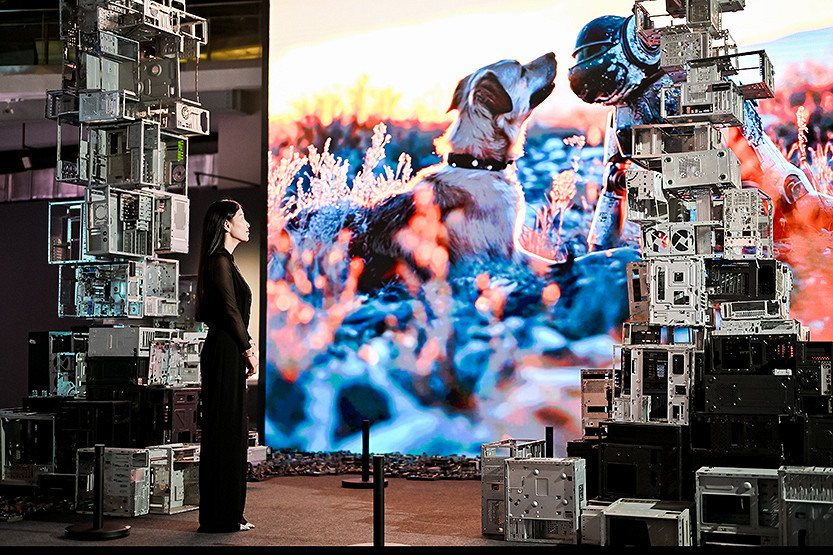
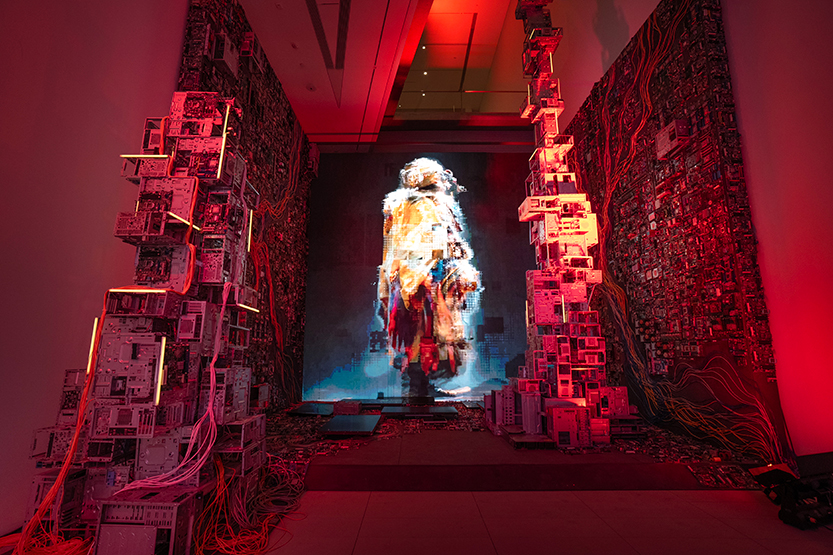
The exhibition will also host the Australian premiere of Tuengel by Dr Wang Zhigang, professor of information and design at Tsinghua University in Beijing. Built from e-waste, the video installation immerses audiences in a post-apocalyptic electronic wasteland where humans, animals and intelligent machine lifeforms coexist among the ruins of obsolete technology.
Science Gallery Melbourne director Dr Ryan Jefferies said the exhibition could not be more timely.
“It encourages us to confront the pressing realities of our time in an increasingly turbulent world,” he said.
“It’s an invitation to step into a future where creative and intercultural collaborations inspire hope and foster resilience.”
EMERGENCE(Y) is curated by Tilly Boleyn, with input from a team of academic experts and young people. •

Da Guido La Pasta enters its next chapter
Infrastructure plan puts focus on Carlton, Parkville and East Melbourne
 Download the Latest Edition