St Patrick’s Cathedral renewal project launched
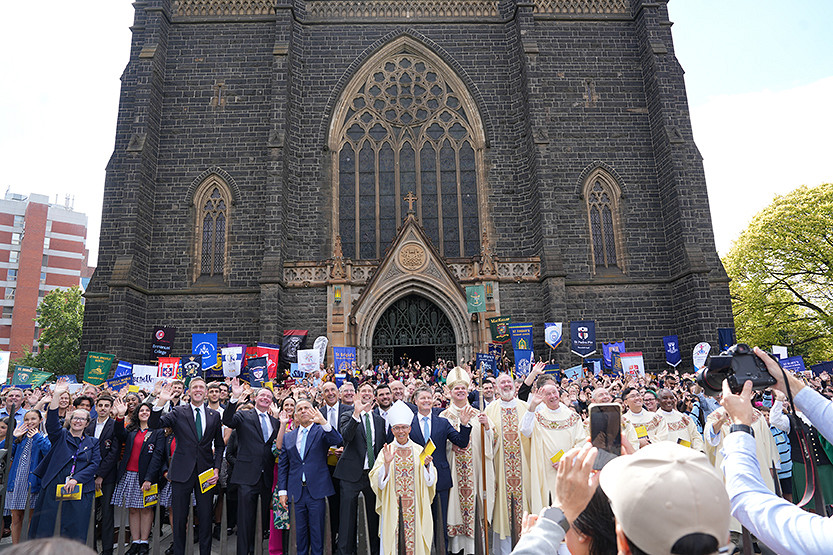
The Archbishop of Melbourne has launched a $190 million project to repair and renew St Patrick’s Cathedral and “reimagine” its precinct, with an appeal to parishioners and other potential donors to “be part of the vision”.
Speaking at the cathedral on St Patrick’s Day, Archbishop Peter A. Comensoli launched the ambitious renewal plan, dubbed “Light into the City”, to be carried out in two stages.
The first, costing $130 million – $90 million of it already secured – will see urgent repairs to the Gothic Revival cathedral carried out, a crypt and chapel created within it, a new assembly building or auditorium constructed next to it and landscaping work, including the provision of more toilets, undertaken “to make the precinct more accessible and welcoming”.
The second stage would involve the restoration of the cathedral’s presbytery and Cardinal Knox Centre buildings – “heritage landmarks” which in the future could potentially be used for initiatives connected with culture, the arts and social outreach, Archbishop Comensoli said.
The “once-in-a-generation project” for a “long-term renewal of one of Melbourne’s most significant spiritual, cultural and architectural landmarks” was one that would require “very significant generosity”, the Archbishop acknowledged, urging the community to “participate in the public campaign to bring both foundational stages of the project to fruition”.
“For more than 125 years, St Patrick’s Cathedral has been a light into the city; a place of prayer, beauty, welcome and refuge,” he told the March 17 congregation.
“Light into the City is about caring for what we have inherited, while ensuring that this cathedral and its precinct can continue to serve the people of Melbourne, Catholics across the archdiocese, and all those who visit through faith, hope and hospitality for generations to come.”
The Catholic Archdiocese of Melbourne estimated nearly a million people entered the cathedral every year, the Archbishop said.
For the first stage of the five-to-10-year project, $30 million has already been pledged by members of the community and $60 million is set to come from the federal government.
A spokesperson for the Department of Infrastructure, Transport, Regional Development, Communications, Sport and the Arts confirmed the $60 million commitment.
“The project is in the planning stage, and we are working with the Victorian Government and Catholic Archdiocese of Melbourne to bring forward a detailed proposal to support a funding agreement,” the spokesperson told Inner City News.
On the $100 million funding gap, the archdiocese said its newly launched campaign was “designed to draw on a broad mix of support, including individuals, philanthropic donors, parish communities, foundations and other institutional partners”.
In the month since its announcement there had already been strong support, it said.
All funds raised for Light into the City were purpose-specific, the archdiocese hastened to add, and would not be redirected away from existing commitments, including support and compensation programs.
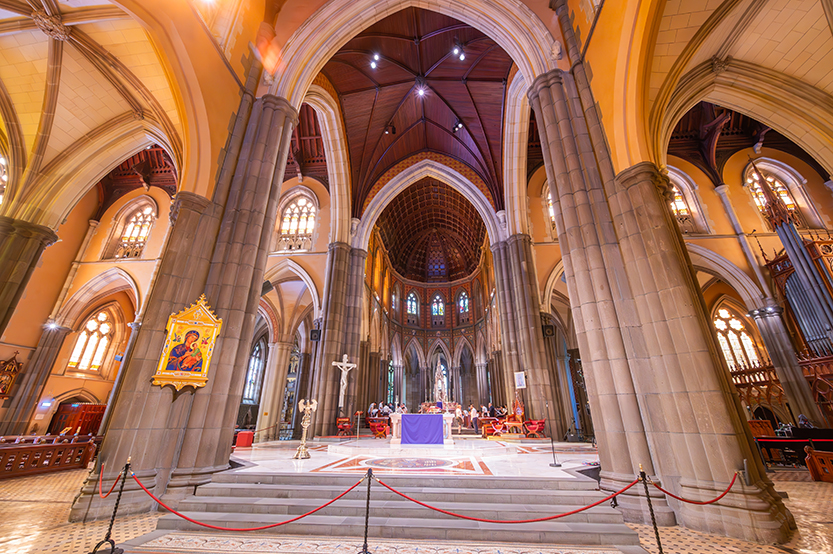
The cathedral’s most urgent repair issues related to its deteriorating sandstone, particularly evident in its spires and window tracery, where sections were weathering and, in some cases, had begun to crumble, the archdiocese said.
Sandstone in the external façades also required conservation and repair.
Much of the slate roof and associated drainage systems required replacement and sections of the tiled floor needed to be reset and stabilised, while some internal stone and paintwork features needed to be cleaned, repaired and conserved.
These works were essential to preserving the cathedral’s integrity and safety, the archdiocese said.
The lighting, sound and audiovisual systems needed to be upgraded for its operation.
For the new building, which would provide “gathering spaces and an assembly hall for parish life, for community and social celebrations, civic dialogue, cultural events, education, music and outreach”, architect Angelo Candalepas had been engaged.
Mr Candalapas had “a strong track record in major cultural and civic architecture” and the careful integration of contemporary design with heritage contexts, the archdiocese said.
He had now been working on the design for some time, and planning approval was anticipated sometime this year, with construction expected to start in 2027.
A further, final stage of the project involving the construction of new facilities for mission agencies was yet to be developed and not part of the Light into the City fundraising campaign. •
Related Articles
Rebuilt Corkman meets cautious approval
The rebuilt Corkman Irish hotel, revealed when its scaffolding was removed in mid-June, has been met with cautious approval by the Royal Historical Society of Victoria (RHSV) despite the new building’s concrete slab walls.
Read More
Flower show extension sparks fresh Carlton Gardens concerns
A decision to extend the Melbourne International Flower and Garden Show’s licence in Carlton Gardens until 2029 has reignited concerns about community consultation and the long-term protection of the World Heritage-listed precinct.
Read More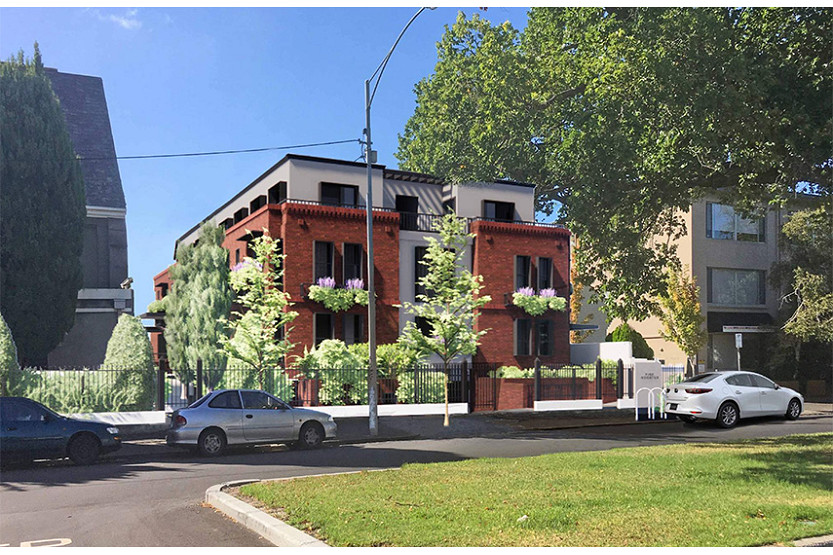
Council backs St Nicholas Church redevelopment in East Melbourne
The City of Melbourne has approved a long-running planning application for St Nicholas Antiochian Orthodox Church in East Melbourne, giving the green light to a heritage-sensitive redevelopment.
Read More
Farewell Inner City News – a short but meaningful chapter

Naughtons to toast 10 years under its current custodians
 Download the Latest Edition