New powers target Carlton eyesore
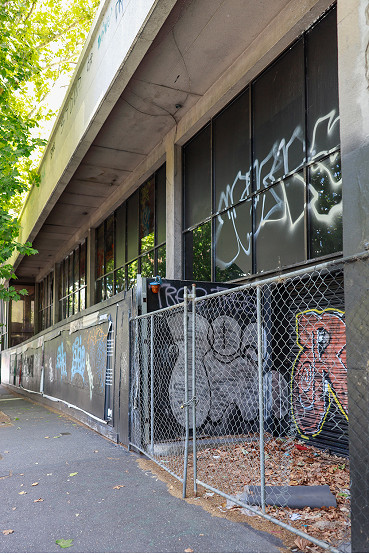

New state government reforms could give the City of Melbourne a stronger hand to pressure owners of long-vacant and derelict buildings to act, with Carlton’s former Cancer Council site among the most prominent local examples.
The Local Government Legislation Amendment (Stronger Communities) Bill 2026, introduced to parliament in June, would amend the City of Melbourne Act 2001 to give the council more flexibility in how it applies differential rates.
Currently, the highest differential rate the council can set is no more than twice the lowest rate. The bill would increase that limit to four times the lowest differential rate, while retaining the city’s use of Net Annual Value as the valuation base for rates.
For residents in Carlton, the reform is likely to be viewed through the lens of several long-running problem sites, particularly the former Cancer Council building at 1 Rathdowne St.
The prominent corner site, opposite the UNESCO World Heritage-listed Royal Exhibition Building and Carlton Gardens, has sat boarded up, vandalised and repeatedly breached by squatters since being sold to private interests more than a decade ago.
It remains on the market after being formally listed for sale last year, following years of failed development attempts and growing community frustration about vandalism, vermin and antisocial behaviour.
The 3106 sqm site was purchased in 2013 by Chinese billionaire Wang Hua for a reported $21 million. A 13-storey residential tower proposal was rejected in 2022 on overshadowing grounds, while a proposed $5 million interim upgrade in 2019 never eventuated.
The site has since become one of the clearest examples of what Lord Mayor Nick Reece has described as the city’s “worst eyesores”.
Cr Reece previously told Inner City News that the former Cancer Council building was “one of the great eyesores of the city” and said it was unacceptable for buildings to fall into such disrepair that they posed risks to the community.
The new bill responds to concerns raised by the City of Melbourne about vacant and derelict properties that have become unsightly, unsafe or magnets for vandalism and rough sleeping.
In a statement to parliament on June 18, Minister for Local Government Paul Hamer said the number of properties of specific concern to the council in 2026 was around 20 to 30.
The proposed differential rate settings are intended to give owners a stronger financial incentive to develop, clean up or otherwise improve neglected sites.
Acting Lord Mayor Roshena Campbell welcomed the reform, saying it would bring Melbourne into line with other councils across Victoria.
“Changes to the City of Melbourne Act will finally bring our municipality in-line with all local governments across the state on how differential rates can be applied,” Cr Campbell said.
She said the measure was not about raising extra money for the council, but about changing behaviour.
“This does not generate any additional revenue for the council – but it does allow us to crack down on some of the city’s worst eyesores, while offering an incentive for others to do the right thing,” she said.
We’ll explore how we can best use these changes over the coming months. We want to see sites like the Cancer Council cleaned up and redeveloped as quickly as possible so we have a city we can all be proud of.
Another prominent local site is Albert Heights at 83–91 Albert St in East Melbourne, which remains on the market and has become a concern for residents due to reports of squatting and antisocial behaviour.
The former serviced apartment building sits near City Edge Apartments, another site residents have previously linked to drug activity, rubbish dumping and safety concerns.
Together, the buildings have contributed to growing local concern about the amenity and safety of the Albert St corridor, close to Fitzroy Gardens and Powlett Reserve.
In September last year, councillors backed a motion calling for a comprehensive review of how the council deals with vacant, unsafe or unsightly premises.
That review included consideration of the city’s Activities Local Law, graffiti management, planning and building enforcement powers, cost recovery options, demolition orders, interim green space and the use of differential rates, levies and charges.
While the new laws would not automatically resolve sites such as the former Cancer Council building or Albert Heights, they would give the council a sharper financial tool to target owners who leave buildings vacant and deteriorating.
For local residents who have lived with boarded-up buildings, graffiti, squatting and safety concerns for years, the test will be whether the new rating powers can turn land banking from a passive strategy into an expensive one. •
Related Articles
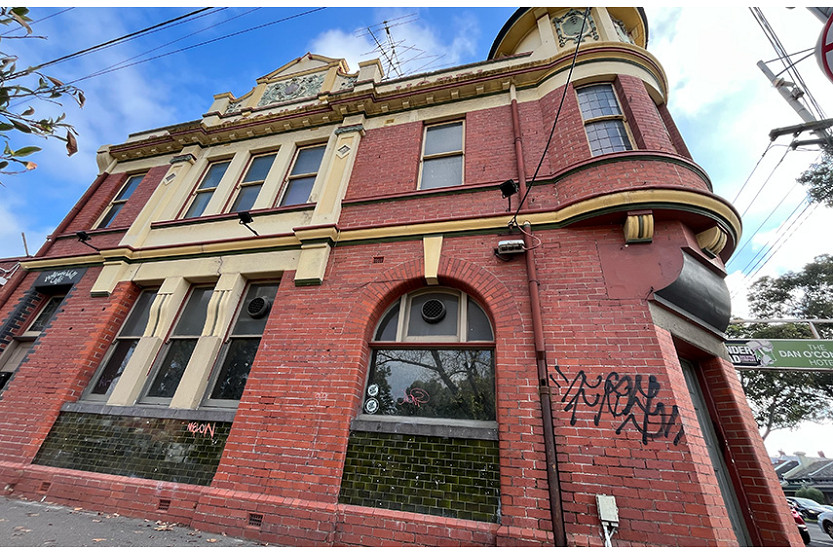
Carlton’s Dan O’Connell hits the market
As Inner City News foreshadowed last month, Carlton’s iconic Dan O’Connell Hotel is back on the market – for sale or for rent – with real estate agents listing the landmark building on Friday, July 31.
Read More
East Melbourne rentals fall short: new report
Research from La Trobe University has found rental properties in East Melbourne ranked among the lowest in Victoria for compliance with minimum standards.
Read More
Victoria’s rental reforms: Protecting tenants … and accidentally evicting landlords
Victoria has never been shy about a rental reform.
Read More
Farewell Inner City News – a short but meaningful chapter

Naughtons to toast 10 years under its current custodians
 Download the Latest Edition