Heritage reimagined at Lincoln Square: council backs adaptive reuse of former Allen & Co. piano factory
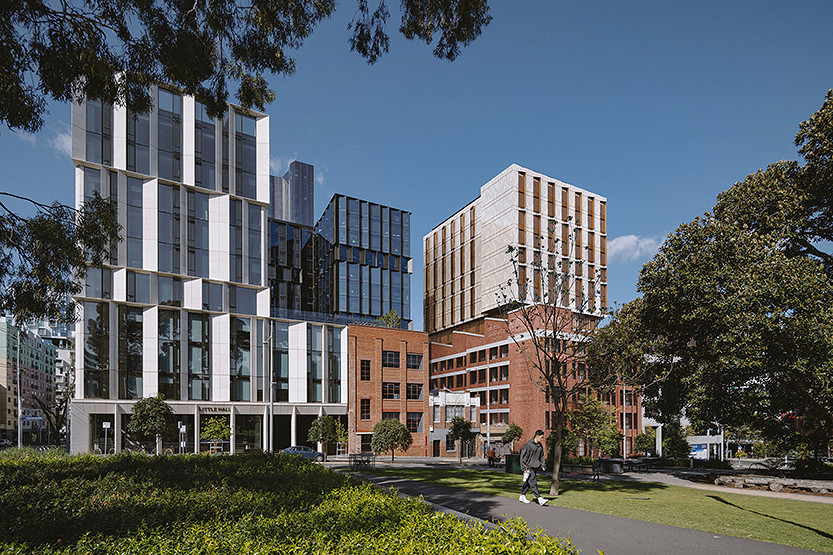

The City of Melbourne has unanimously backed plans to bring one of Carlton’s most storied buildings back to life, approving an adaptive-reuse scheme for the former Allen & Co. Piano Factory and Warehouse at 23–31 Lincoln Square South.
At their October 7 Future Melbourne Committee (FMC) meeting, supported granting a permit for a 14-storey (46. 94-metre) student accommodation project with 268 beds and a small ground-floor retail tenancy, retaining the five-storey heritage building and adding new levels above it.
The site sits within the Capital City Zone and the Lincoln Square South Heritage Precinct (Significant grading), with the report finding the proposal aligns with the Melbourne Planning Scheme subject to conditions.
Council officers described the scheme as an adaptive-reuse outcome that balances heritage with contemporary policy objectives for City North, where student housing is strongly encouraged. Fathom Lincoln Pty Ltd/Contour Consultants submitted the $40.12 million plans, designed by architecture firm Hayball, on behalf of developer Ambertree Vic Mel (Lincoln) Pty Ltd.
While three objections were received – principally on heritage, overshadowing and built-form grounds – officers recommended approval with a suite of heritage-focused conditions. These include a façade strategy and materials controls, conservation measures, and design refinements to ensure heritage primacy – most notably a deeper setback near the sawtooth parapet so the historic roof form remains the dominant element when viewed from Lincoln Square. Officers also noted reinstatement of original hopper-sash windows as part of the conservation approach.
During the meeting, the council’s planning chair and Deputy Lord Mayor Roshena Campbell said the alternate motion tightened façade controls “to hold the applicant to the design measures that they have proposed,” emphasising retention of “alabaster ceramic tile cladding” and high-quality, robust materials so “this is a building everyone in the City of Melbourne can be proud of.”
She framed the decision as “a pragmatic, heritage-led way to bring this building back to life,” adding that Melbourne “can honour its past while accommodating growth,” with the old clearly distinguished from the new through respectful massing and materials.
Council planner Julian Edwards told councillors the scheme “strikes that right balance between the heritage and the new form,” explaining that adaptive reuse can “aid feasibility” to secure long-term preservation where standalone office re-use has proven unviable.
He noted the proposal retained key elements – the solid brick host, the celebrated sawtooth roof parapets and lift overrun – and, through conditions, reinstated heritage windows.
Cr Phil Le Liu praised the approach as “respectful,” saying the project would lead future residents to ask, “what is this building that I’m living in?” – a prompt for deeper appreciation of its history.
The approval caps a long, at times fraught, planning history. A 2015 apartment scheme proposing extensive demolition – removing the sawtooth roof and much of the building fabric – was refused by the council and VCAT, which criticised the dominance and materiality of the addition and urged retention of the parapets and rear wall. The council later approved a more sympathetic residential scheme in 2019 at a reduced height, but it lapsed without being built. The current student housing proposal follows that heritage-led trajectory and comes in a changed precinct context where other higher-order student buildings now frame Lincoln Square.
Officers’ assessment considered whether demolition was limited and respectful, and whether the new form’s bulk, scale and setbacks preserved the building’s significance.
On overshadowing, officers found the narrow width of Cumberland Place meant the existing five-storey heritage building already shades the two-storey Swanston St properties’ north-facing windows; the proposal therefore adds no new overshadowing to those windows.
The Carlton Residents’ Association (CRA) opposed the application, citing the site’s “Significant” grading, arguing that economic considerations should not justify removal of any of the building’s heritage fabric, and that a nine-storey addition atop was not sympathetic.
The council’s response effectively split that difference: it accepted the need for adaptation to secure the building’s future, imposed stronger façade and conservation conditions, and required subtle but material design changes – such as pulling the addition further off the sawtooth at the critical Lincoln Square corner – to keep heritage in the starring role.
The council report explicitly notes the emerging tall-form context around the square, including a similarly scaled student scheme nearby, supporting a “balanced” outcome rather than a literal replay of the 2019 permit envelope.
The applicant must satisfy detailed conditions before endorsement, including façade and materials strategies, alongside a Conservation Management Plan and updated plans that capture the setback refinements.
With those hurdles cleared, construction would convert a long-vacant landmark – empty for much of the past decade – into purpose-built accommodation that doubles as a living lesson in Carlton’s manufacturing past. •
Related Articles
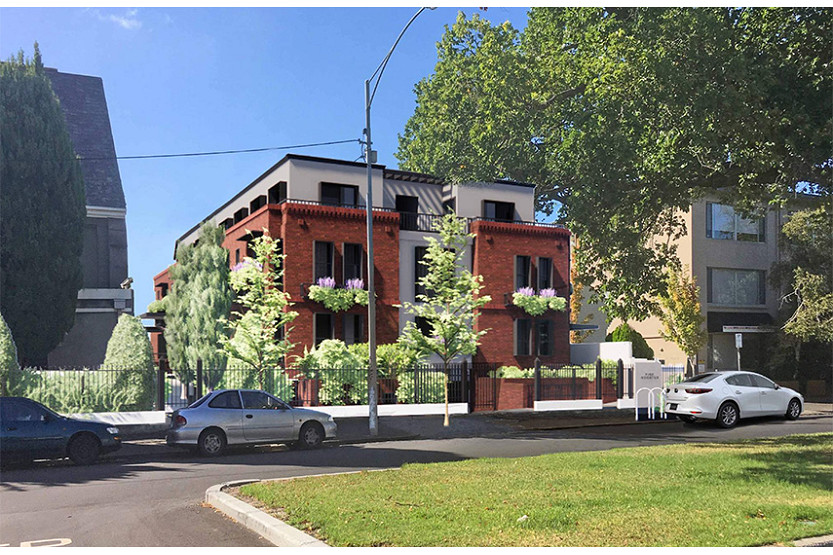
Council backs St Nicholas Church redevelopment in East Melbourne
The City of Melbourne has approved a long-running planning application for St Nicholas Antiochian Orthodox Church in East Melbourne, giving the green light to a heritage-sensitive redevelopment.
Read More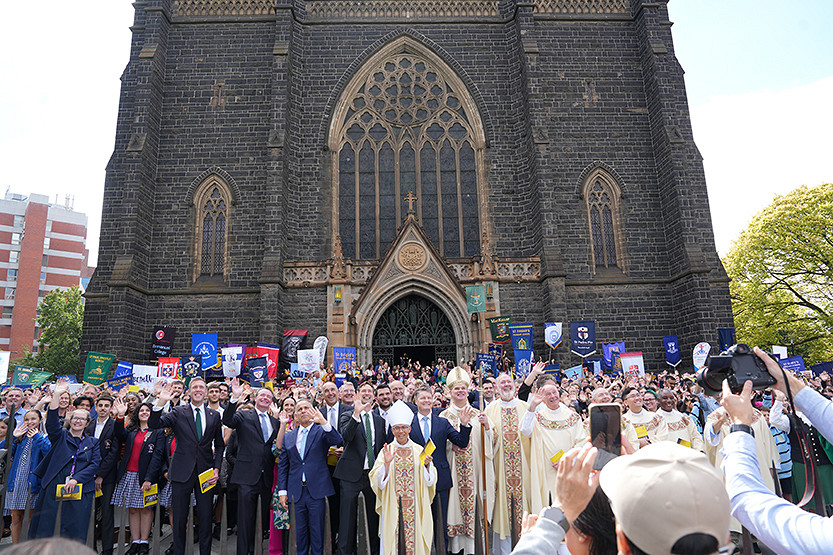
St Patrick’s Cathedral renewal project launched
The Archbishop of Melbourne has launched a $190 million project to repair and renew St Patrick’s Cathedral and “reimagine” its precinct, with an appeal to parishioners and other potential donors to “be part of the vision”.
Read More
Parkville heritage review moves to panel after mixed submissions
A long-running review of heritage protections across Parkville has moved a step closer to completion, with councillors voting unanimously on February 17 to endorse post-exhibition changes and refer unresolved matters to an independent planning panel.
Read More
La Mama to launch three-month season of bold new works

Angelo Gargasoulas sentenced on drug crimes
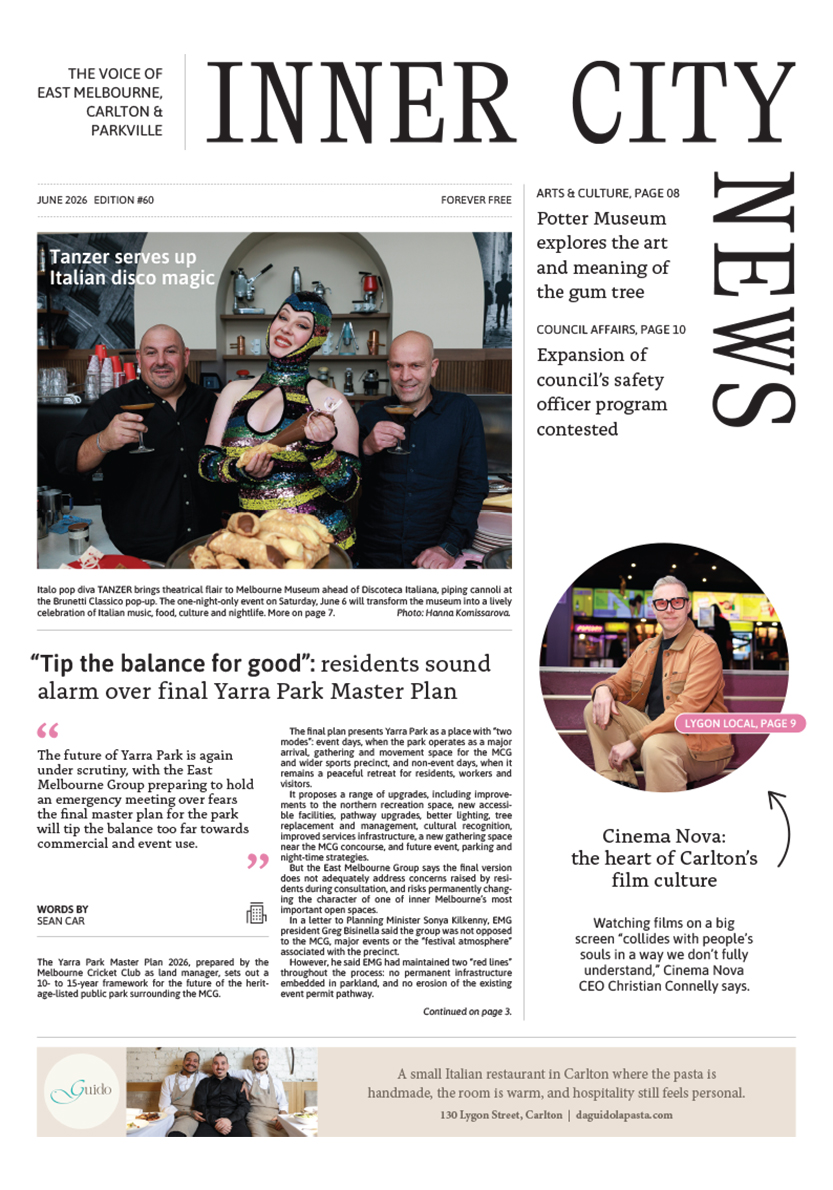 Download the Latest Edition