Draft urban forest plan looks to protect Parkville’s green character
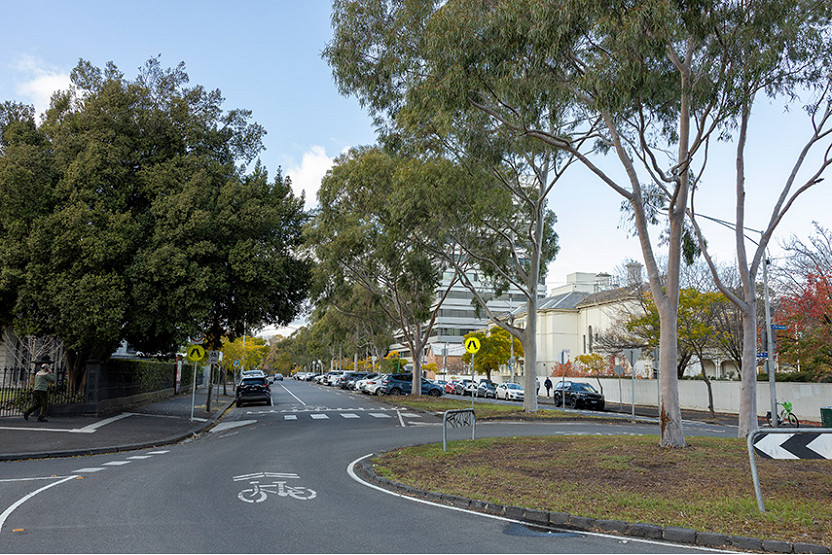

Parkville’s much-loved green character would be strengthened and made more climate-resilient under a draft urban forest plan set to go before the City of Melbourne on July 7.
The draft Parkville Urban Forest Precinct Plan is one of three new 10-year greening plans being considered by the Future Melbourne Committee, alongside draft plans for Southbank and Fishermans Bend.
The draft Parkville plan is proposed to proceed to community engagement through Participate Melbourne between July and August.
If approved, the final version would return to the Future Melbourne Committee in 2027, with implementation to begin after that.
The plan forms part of the City of Melbourne’s broader Urban Forest Strategy, which aims to increase tree canopy cover across the municipality to 40 per cent by 2040.
Parkville already has one of the municipality’s strongest urban forests, with canopy cover of 29.2 per cent. Since 2012, more than 15,600 trees have been planted in the precinct, and 13 major streetscape projects have been completed.
But the draft plan warns that even greener neighbourhoods face challenges from climate change, pests, disease and the slow loss of mature canopy.
Parkville’s urban forest is defined by Royal Park, which gives much of the precinct its distinctive open woodland character. The plan describes the area as unique within the city, with four separate residential areas sitting around the edges of the park.
Royal Park’s native and indigenous planting palette, diverse understorey and less formal landscape strongly influence surrounding streets. At the same time, Parkville also contains important historic avenues, including large elm plantings along Royal Parade and Flemington Rd.
The draft plan says Parkville’s urban forest is dominated by elms and native eucalypts, including red gums, yellow box gums and spotted gums, as well as she-oaks.
It also notes that Parkville has a relatively high proportion of indigenous and native tree species, reflecting the ecological and cultural significance of Royal Park.
Community feedback has shaped the draft vision for Parkville, which imagines an urban forest where indigenous trees and diverse plantings enhance biodiversity, Aboriginal and European heritage and community life.
The community also highlighted the importance of collaboration between Traditional Owners, residents, the University of Melbourne, the zoo, council and other land managers.
Key priorities include retaining Parkville’s existing character, supporting biodiversity, expanding understorey planting and identifying new opportunities around recently developed areas, including near the hospitals.
However, the plan also acknowledges that some trees central to Parkville’s identity, including elms, are increasingly vulnerable to rising temperatures, pests and disease.
Elm leaf beetle and diseases affecting Myrtaceae plants are identified as particular risks for the precinct. To reduce the chance of large-scale tree loss, the plan proposes targeted species diversity and “species breaks” while maintaining local character.
The draft plan also identifies streets with low canopy cover and no recent planting as priorities for the next decade, noting that trees can take up to 20 years to provide significant shade.
Significantly aged avenues, many of which contribute strongly to Parkville’s character, would require increasing levels of care and long-term planning as climate pressures intensify.
The council report says the three draft plans for Parkville, Southbank and Fishermans Bend have been informed by tree data, environmental risks, heat vulnerability, biodiversity opportunities, community preferences and Traditional Owner perspectives.
The estimated cost to deliver the three plans over 10 years is $3 .11 million, with funding to be considered through future annual plan and budget processes. •
Related Articles
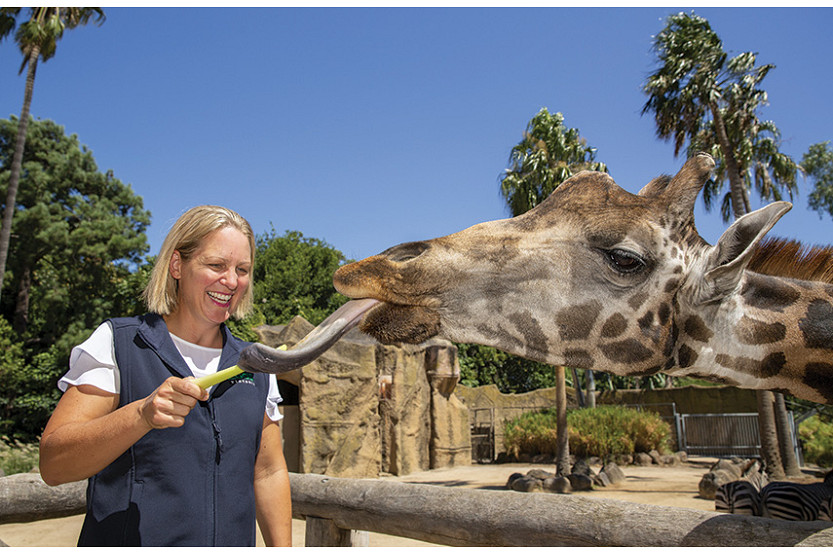
Union launches petition against zoo cuts
The Community and Public Sector Union has launched a petition against a reported Zoos Victoria plan to cut 70 full-time jobs as part of a restructure of the statutory organisation.
Read More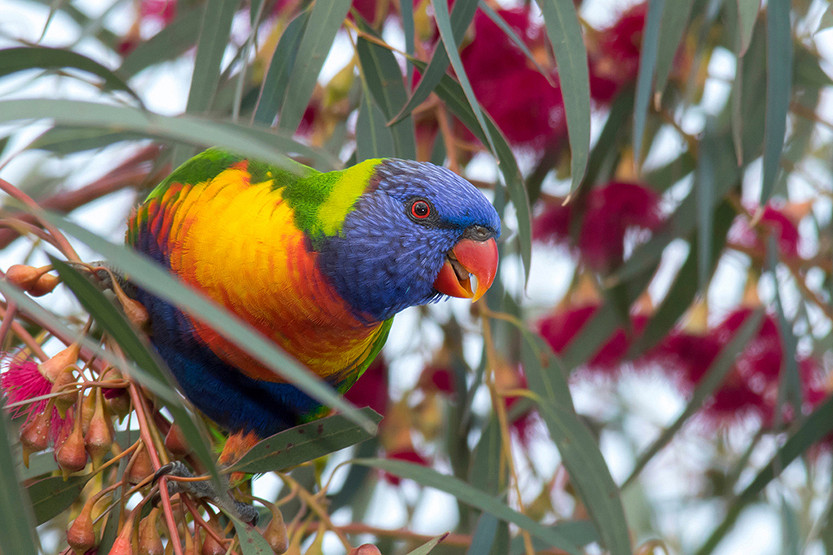
Bird flu threat raises urban wildlife fears
The likely local impacts of the H5N1 bird flu that has now reached Australian shores are “very hard to know” but could see our urban birds, including swans, parrots and owls, affected.
Read More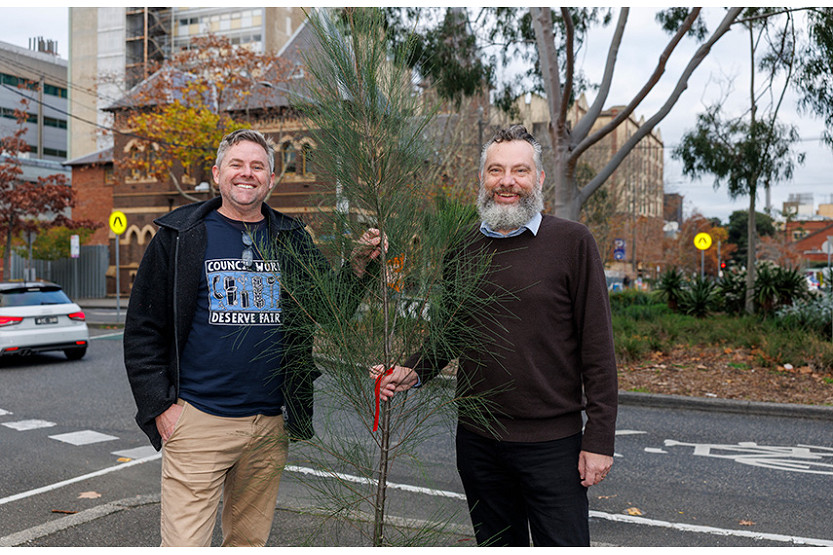
“Tree-thousand” greening milestone marked in Carlton
The planting marks the delivery of the council’s 2026–27 commitment to add 3000 new trees across the municipality as part of its broader Urban Forest Strategy.
Read More
Farewell Inner City News – a short but meaningful chapter
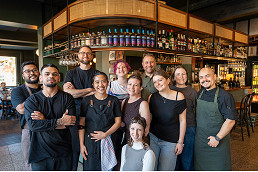
Naughtons to toast 10 years under its current custodians
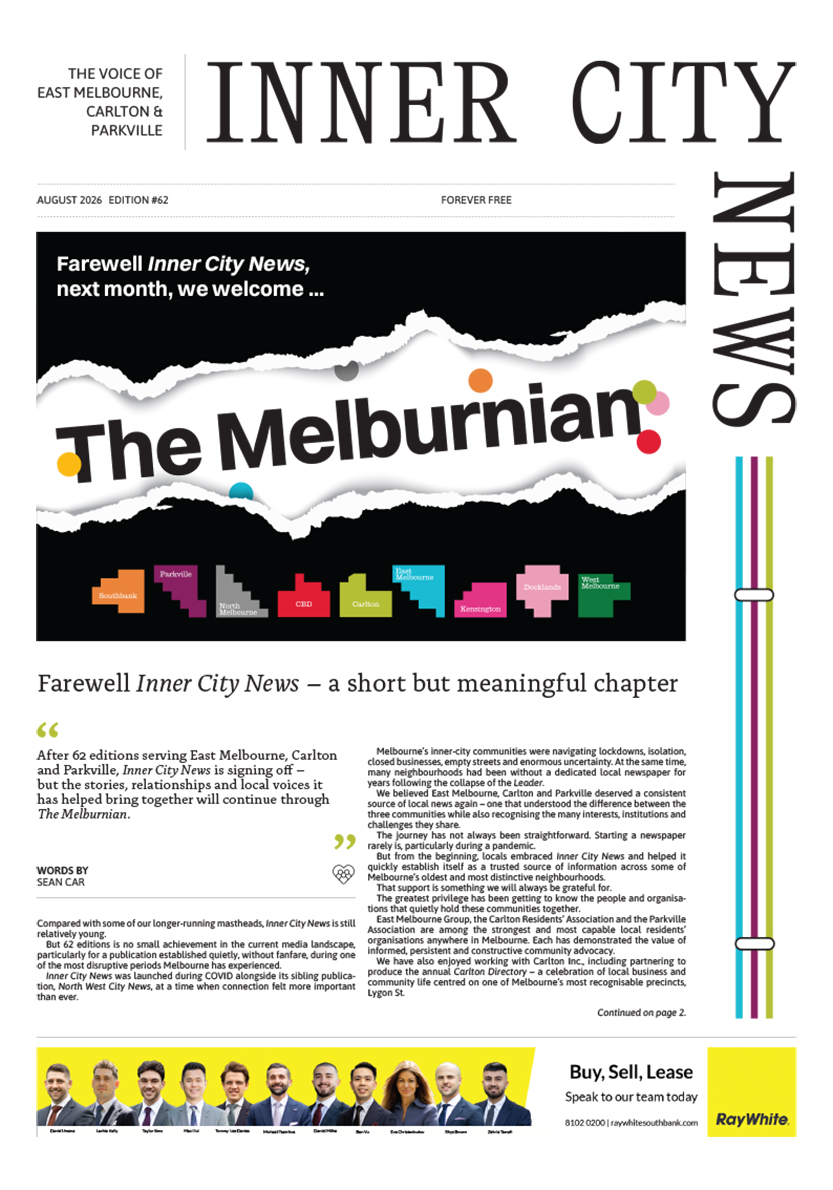 Download the Latest Edition