Wards in the City of Melbourne: and then there were none!
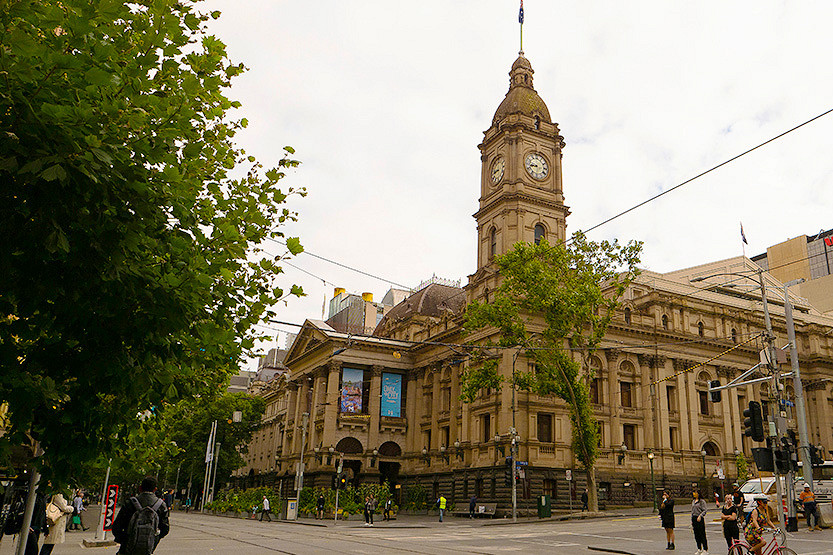
Local governments are “local” and the division of a municipality into wards has been the bedrock of localism and local governance both across Australia and here in the City of Melbourne. Well, at least until …
In September 1993 former Victorian Premier Jeff Kennett dismissed the Melbourne City Council that comprised 21 councillors and seven wards covering the municipality of Melbourne.
As a councillor in a multi-member ward covering Kensington and North Melbourne the learning curve on the role and responsibility of supporting the local communities was evidently clear for myself, residents and local traders.
But there were too many councillors and too many wards to satisfy the whims of a Premier committed to a CBD council, so he acted.
In 1995 an elected council was returned as a “board”. The council chamber was off limits and a board-style desk was purposely built in an adjoining room to reflect a classic neo-liberal approach with compulsory competitive tender processing enacted and a managerial philosophy that had been inherited from commissioners for cost cutting and outsourcing council services to the private sector.
The new council comprised nine councillors, five elected district councillors elected across the municipality and four elected across four wards covering only some of the suburbs that made up the municipality. I was the councillor in a single member ward covering North Melbourne and Kensington.
As some will recall North Carlton was hived off to the City of Yarra and parts of North Melbourne and Kensington were hived off to the City of Moonee Valley only to be returned some years latter following a resident backlash during the premiership of Steve Bracks and under former Local Government Minister Richard Wynne.
But there’s more to the history of wards … or perhaps less!
In July 2001 former Premier Steve Bracks again dismissed the council and did away with wards entirely. There was an increase in the number of councillors to 11, with a presidential-style election of the Lord Mayor and Deputy Lord Mayor, postal voting only, no limit on campaign funding, a business directed council and a two-vote gerrymander for business.
There have been many other iterations of the Melbourne City Council structure and role foisted on the City by Spring Street that continue to diminish the role of the city council to one of advice only. For example, the state government holds authority over major developments and strategic policy and is increasingly limiting the role of city councils and their residents in decision making.
The introduction of councillor portfolios reflects responsibility but no accountability. As a senior manager told me recently when I sought advice from a councillor, “operational matters relating to service delivery are delegated to council officers who are directly responsible for delivery”.
Point taken, so welcome Cr SnapSendSolve as your local ward councillor. Snap Send Solve is a privately owned app that enables residents to report incidents of concern, including parks and gardens maintenance, street trees, parking, dumped rubbish and bin use. Snap Send Solve enables a photo of the issue and its location to go directly to a council and a report returned on receipt of the issue and the result. The City of Melbourne has adopted Snap Send Solve as a service tool for residents.
Cr SnapSendSolve is however no substitute for a ward councillor who is both seen and heard in their neighbourhood and who can apply that engagement to both effective service delivery but importantly to strategic policy settings.
It is not the perceived parochialism of wards that challenges the governance of a city but the lack of democratic engagement that impacts on the standing of local, state and federal governments as legitimate ways to democratically govern and create fair, just and participatory communities. The Carlton Residents’ Association supports a review of the City of Melbourne Act as requested by the Melbourne City Council that awaits the approval of Nick Staikos Minister for Local Government.
We need to put the “local” back into local government and return to a Melbourne City Council that is representative, participatory and accountable … and with wards! •
Related Articles
Heritage lottery
Three weeks ago, on Saturday, May 9, there was a wonderful celebration of the 125th anniversary of the opening of Australia's Federal Parliament.
Read More
Carlton’s future in the balance
The Carlton Residents’ Association (CRA) has decided to be proactive in promoting issues that will protect and improve Carlton.
Read More
The future of Lygon St is no laughing matter!
The Carlton Residents’ Association (CRA) has had a long-standing interest and involvement in Lygon St as the activity spine of the Carlton community.
Read More
La Mama to launch three-month season of bold new works

Angelo Gargasoulas sentenced on drug crimes
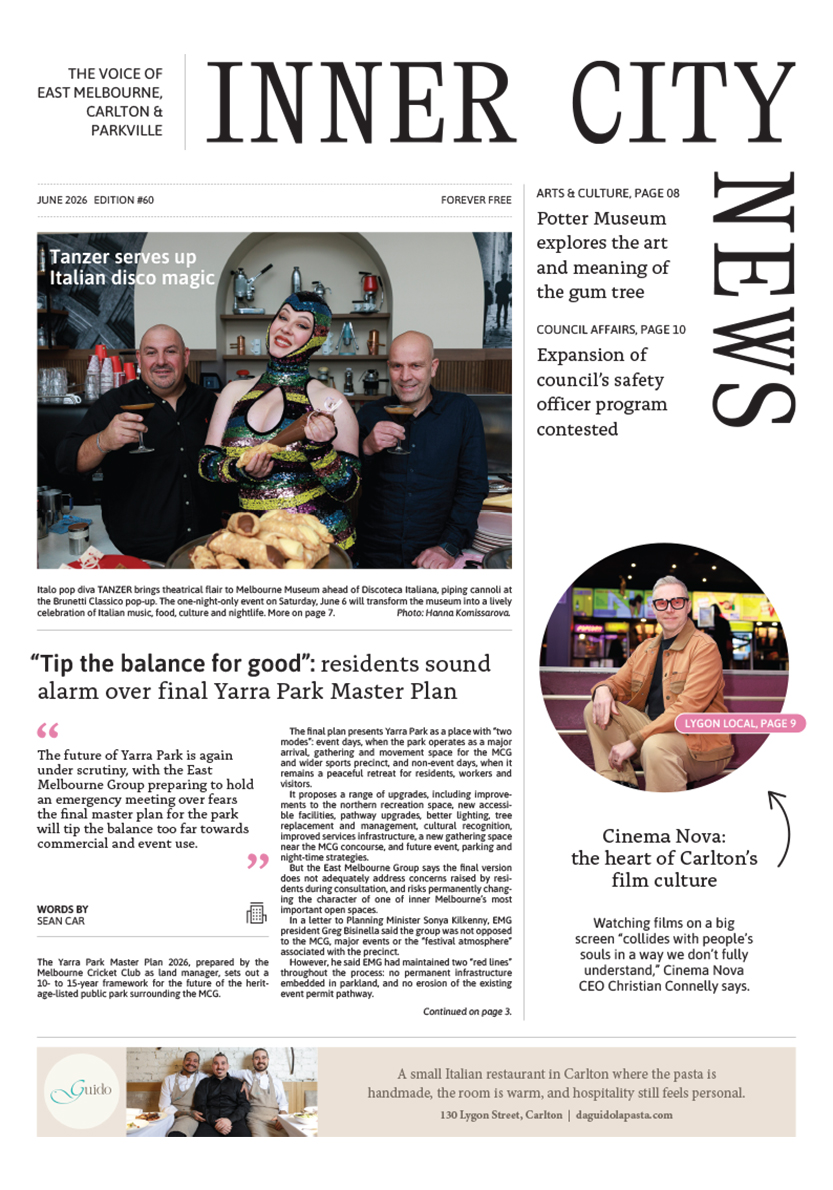 Download the Latest Edition