The unsolved mystery attached to one of Melbourne’s most historic homes
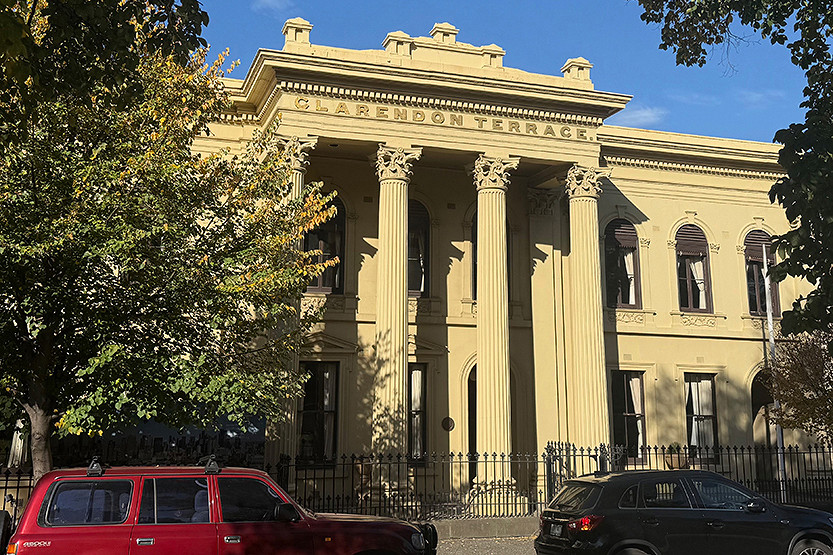
Walking down Clarendon St in East Melbourne, the National Trust-owned Clarendon Terrace stands out for its Corinthian four-column portico and gold inscription.
While the whole building is for sale and appears from the outside to be a single grand residence, it is actually made up of three individual terraces.
Clarendon Terrace has been on the market since March 2024 and is currently listed at an indicative price of $8.3 to $9.1 million. The listing for 208-212 Clarendon St highlights its long history, from its 1857 construction to later housing the Menzies Foundation.
The agents spruik “its magnificent proportions, soaring ceilings, period details and marble fireplaces”. But one piece of Clarendon Terrace’s history is absent from the listing: its connection to a decades-old unsolved murder.
The Victorian Heritage Register emphasises Clarendon Terrace’s “architectural, aesthetic, social and historical importance”. But the building holds a more sombre significance for relatives of Ennie May Anderson.
Ian Scougall was only a child when his 78-year-old “Aunty Queenie” was stabbed in her small flat on the second floor of Clarendon Terrace, on October 29, 1961. Coroner J.W. Egan’s 1962 report, obtained from the Public Record Office Victoria, finds she was “murdered by an unknown person”.
The murder weapon was a carving knife taken from a fellow tenant’s kitchenette and found in the laneway next to the terrace, according to the summary of evidence attached to the coroner’s report.
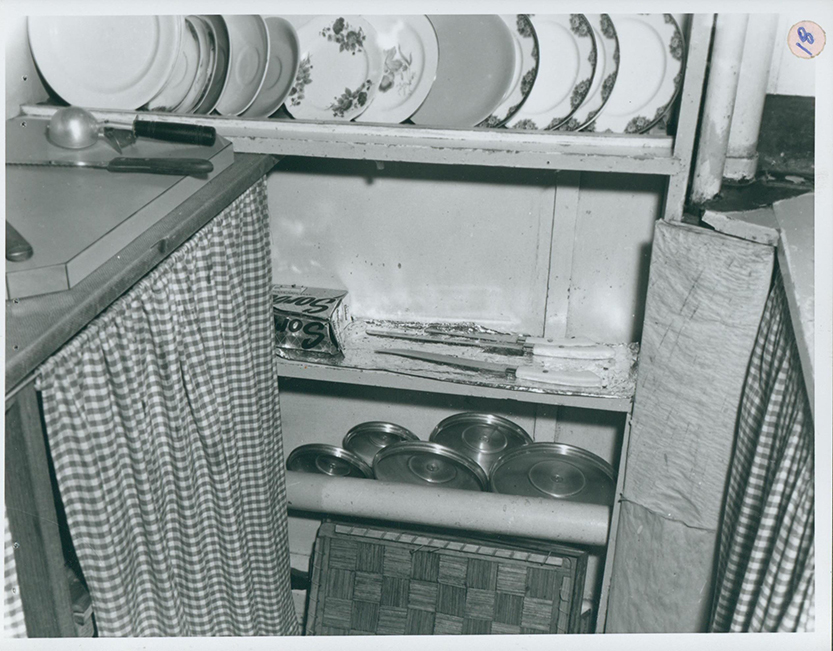
Police photograph of the kitchenette that the murder weapon was taken from. Credit: State Coroner’s Office; Constable Maxwell Neilson, official police photographer.
Now in his late 70s, Mr Scougall remembers his great-aunt as “an avid churchgoer” and Hawthorn supporter. He says she was also “very much a royalist”, recalling that she had gifted him a book about the coronation of Queen Elizabeth.
According to Mr Scougall, Anderson took over the lease of 210 Clarendon St as a boarding house manager, after the early deaths of her daughter and husband.
It was a common misconception that she owned Clarendon Terrace, with The Sydney Morning Herald publishing a story about a “78-year-old woman who owned an East Melbourne residential”, a day after the murder. Mr Scougall contends his great-aunt was “not unduly wealthy”.
1960s East Melbourne was a far cry from what it is today. According to historian and author Dr Liz Rushen, who was one of the founders of the East Melbourne Historical Society, “a lot of single people lived there, and it wasn’t considered desirable at all”.
“Many, many of the old houses had been turned into rooming houses,” Dr Rushen said.
The summary of evidence notes Anderson was subletting to 20 tenants and although she experienced some “domestic trouble”, “it was no more than one would expect from an elderly lady running a large apartment house”.
Mr Scougall recalls that “In those days nobody cared about security”, and the back door to 210 Clarendon St was usually left open.
At the time, Anderson’s grandson Phillip suspected she was murdered for money kept on her person, but the summary of evidence states that this was never verified.
Mr Scougall had witnessed this method of stashing money first-hand. He says Anderson offered to buy his family a new kettle after learning it had broken, and “pulled out the ten shillings … from the top of her dress”. He suspects it became habit “because she was scared of being bailed up in Melbourne in those days”.
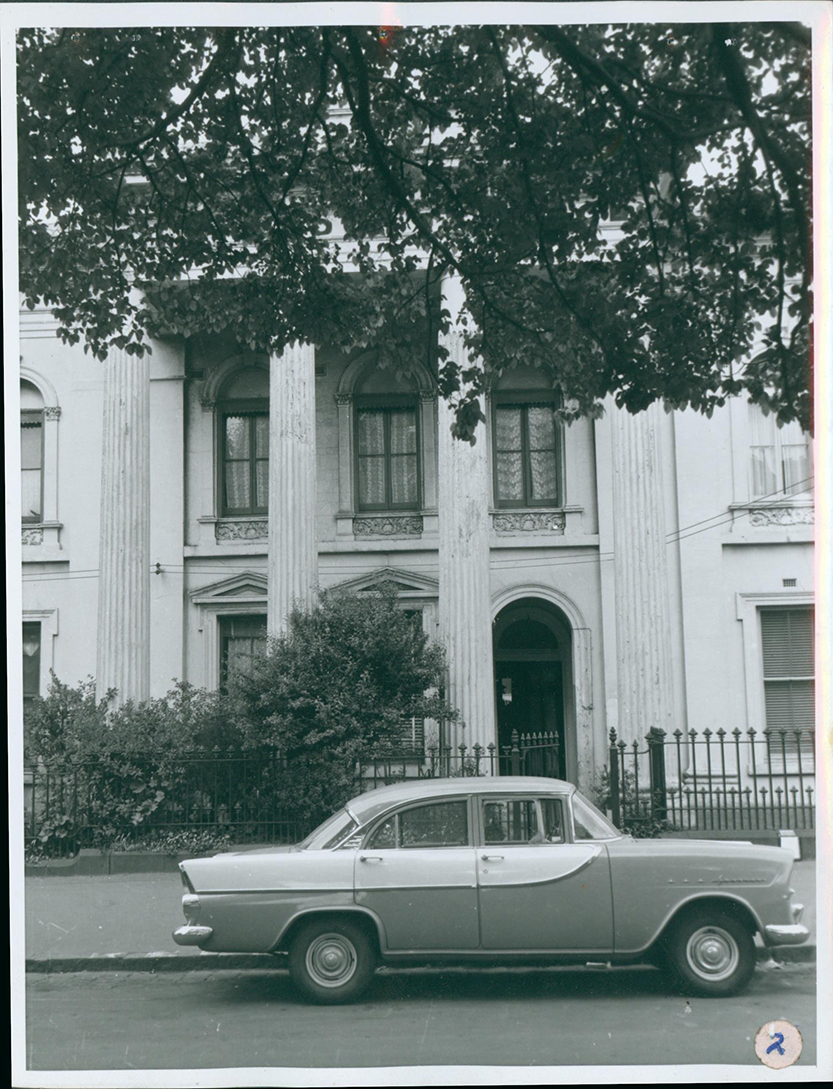
Police photograph of 210 Clarendon Street, taken the day after the murder. Credit: State Coroner’s Office; Constable Maxwell Neilson, official police photographer.
Visits to Clarendon Terrace since Anderson’s death have left Mr Scougall to “wonder if they found anybody yet”, with his own investigations proving fruitless. He chuckles while recounting a visit to the Victoria Police Museum where he attracted suspicion from authorities due to his interest in the case.
Though the murder remains unsolved, there has been speculation around the involvement of Sydney’s infamous Granny Killer John Wayne Glover, as covered by 60 Minutes Australia. “I have seen reports in more recent years that he may have spent some time in Melbourne in that period … but I don’t think it’s ever been proven,” Mr Scougall said.
In the years following the tragedy the building became increasingly derelict and by 1977 owners Compac Ltd had obtained a permit to demolish it despite its heritage status, as outlined in Dr Rushen’s booklet Clarendon Terrace and her neighbours.
Dr Rushen says protests from concerned locals and the Victorian branch of the National Trust, which was founded by residents of East Melbourne in the ‘50s, saved the building. Without their efforts, relatives of Anderson would not have had the chance to visit Clarendon Terrace after her death.
The National Trust took ownership of Clarendon Terrace with state government support, before coming to an agreement in 1980 that the Menzies Foundation would restore the building in exchange for peppercorn rent, according to Dr Rushen’s booklet.
While acknowledging that Clarendon Terrace “stands on its own architecturally”, Dr Rushen’s interest is in retelling the history of residents like Anderson. Decades of National Trust stewardship has ensured that both the building and the stories it houses have been preserved. With its for sale listing on the private market, the future of Clarendon Terrace is now less certain. •
Related Articles
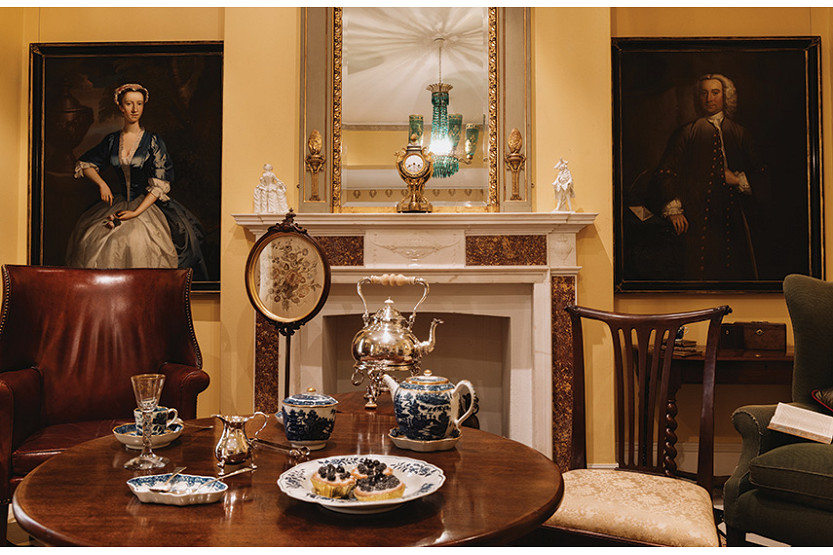
Taste & Temptation: Johnston Collection exhibition tour now open
The Johnston Collection house museum in East Melbourne is thrilled to welcome Dr Matthew Martin as guest curator of their latest exhibition tour Taste & Temptation.
Read More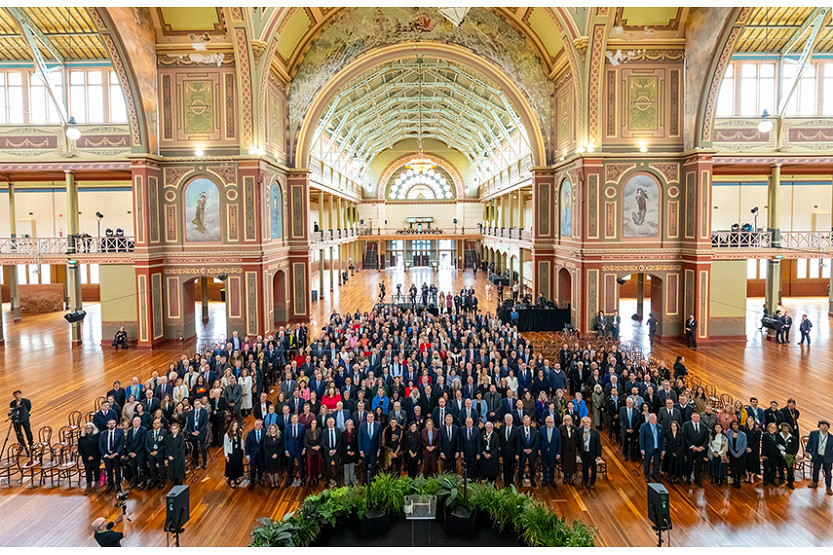
Royal Exhibition Building marks 125 years since birth of federal parliament
Australia’s democratic story returned to one of its most symbolic stages earlier this month, as national and state leaders gathered at Carlton’s Royal Exhibition Building to mark 125 years since the opening of the nation’s first federal parliament.
Read More
Farewell Inner City News – a short but meaningful chapter

Naughtons to toast 10 years under its current custodians
 Download the Latest Edition