LINA backs urgent reforms to support local news


A national organisation supporting local and independent news publishers, which has just moved to Carlton, is ramping up calls for urgent changes to federal media bargaining reforms, warning that small newsrooms could again be left behind unless the proposed legislation is amended.
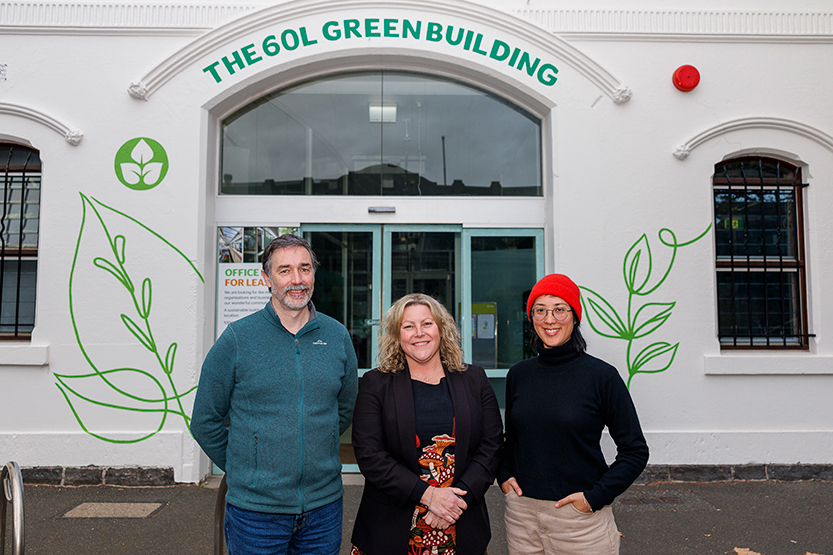
The Local and Independent News Association, known as LINA, is now based at 60 Leicester St in the Australian Conservation Foundation building, from where it continues its work advocating for local, independent and digital-first publishers across Australia.
LINA’s arrival in Carlton is a welcome addition to a precinct already home to advocacy, education, community and civic organisations. But its presence is also a reminder of the national policy battle now facing smaller publishers, with the Federal Government’s proposed News Bargaining Incentive seen as a critical test for the future of local public interest journalism.
LINA is a not-for-profit industry association supporting independent publishers, including Hyperlocal News, publisher of Inner City News and sibling publications CBD News, Docklands News, Southbank News and North West City News.
Founded in 2021 by the Community Broadcasting Association of Australia, LINA has grown into an important voice for media diversity at a time when local newsrooms continue to face major financial pressure and digital platforms dominate advertising revenue.
Since its launch, LINA says there has been an acceleration in newsroom openings in Australia, with 37 per cent of its members formed since 2020 and the median age of member newsrooms now nine years.
Its emergence has coincided with a slowing in the net contraction of newsroom closures recorded by the Public Interest Journalism Initiative, highlighting the role independent publishers are playing in rebuilding local news.
But LINA and other media advocacy organisations are warning that the News Bargaining Incentive, while welcome, must be strengthened to ensure small and medium publishers receive a fair share of platform funding.
In a joint statement released on May 19, LINA joined organisations including the Public Interest Journalism Initiative, Digital Publishers Alliance, Community Broadcasting Association of Australia, Independent Multicultural Media Australia and others in calling for amendments to the draft legislation.
The group said it welcomed the incentive as a mechanism to address disruption caused by digital platforms, adding that the news industry needed this revenue “without delay”.
However, it warned the legislation in its current form risked unintended consequences that could further entrench media concentration and give global digital platforms undue influence over Australia’s democracy.
Small, independent, multicultural and regional publishers, the statement said, were among the most vulnerable to market changes and economic pressure.
The organisations are calling for at least 25 per cent of all platform deals to be made with small and medium publishers with revenue under $50 million.
They argue that, under the current draft, a platform could satisfy its obligation by striking deals with as few as four major media players, leaving smaller publishers excluded.
The joint statement also calls for a materially higher offset rate for deals with small and medium publishers, suggesting 200 to 300 per cent, to overcome the administrative burden platforms face when negotiating multiple smaller contracts.
A third reform relates to the distribution of any levy funds collected. While the groups support a simple and direct distribution model, they argue that a system based largely on full-time journalist numbers would reward incumbents and reinforce media concentration.
Instead, they are calling for 15 per cent of levy funds to be set aside for a supplementary grants program or alternative distribution mechanism for smaller and independent publishers supporting news deserts and underrepresented communities.
The changes, they argue, would not alter the structure or total obligation placed on digital platforms, but would make the scheme fairer and more effective.
“Australia’s small, independent and regional publishers are pivotal to a thriving democracy,” the joint statement said.
“These tweaks and amendments to the draft legislation will ensure this important sector survives and thrives into the future.”
For Carlton, LINA’s presence brings a national reform campaign with direct local relevance. For publishers like Hyperlocal News, and for the communities they serve, the outcome of the News Bargaining Incentive could help determine whether independent local journalism is given the chance not only to survive, but to grow. •
Related Articles

Farewell Inner City News – a short but meaningful chapter
After 62 editions serving East Melbourne, Carlton and Parkville, Inner City News is signing off – but the stories, relationships and local voices it has helped bring together will continue through The Melburnian.
Read More
Naughtons to toast 10 years under its current custodians
Naughtons Hotel will mark 10 years under the stewardship of Ryan Moses and his family with a community celebration on Saturday, August 15, inviting Parkville locals, students, hospital workers and regulars to raise a glass to one of the suburb’s most important meeting places.
Read More
Carlton clinic goes fully bulk-billed
Carlton’s Medicare Urgent Care Clinic has become 100 per cent bulk-billed, with local patients already responding strongly to the change.
Read More
Farewell Inner City News – a short but meaningful chapter

Naughtons to toast 10 years under its current custodians
 Download the Latest Edition