Graduate House fight marks historic milestone
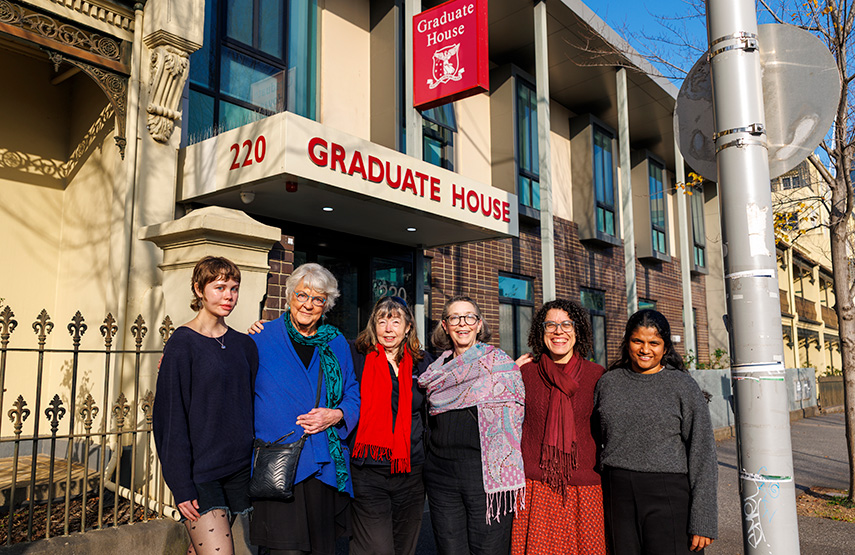

As the Graduate Union prepares to mark more than a century since its founding and 64 years since Graduate House opened in Carlton, members are also mobilising to save the Leicester St college from closure amid concerns its loss would dismantle a rare academic community.
Members of the independent Graduate Union of the University of Melbourne are gearing up to mark the anniversaries of its creation and the opening of its unique accommodation half a century later.
They are also forming a group to fight to save 64-year-old Graduate House, the closure of which would mean losing an incredible community, environment of cross-pollination and of academic encouragement, they say.
PhD student Edith Spiers joined the Graduate Union (GU) and moved into its Leicester St college, Graduate House, from regional Victoria in April last year.
Initially the microbiology student, who is researching malaria genomics, was focused on the practical benefits – not having to commute from the Macedon Ranges every day, getting 12 meals a week provided and living practically next door to the university.
“But then I came and met all these amazing people doing all kinds of things,” Edith said.
“There are people from all around the world, like every continent I would say, and you can talk to them over dinner and just learn all of this interesting stuff.”
“It's completely awesome. I'm very attached to the community here.”
Established in 1911 with Colonel John Monash at the helm, the member-based Graduate Union of the University of Melbourne changed its name and status several times over its more than 100-year history but is now an incorporated association with more than 1300 members.
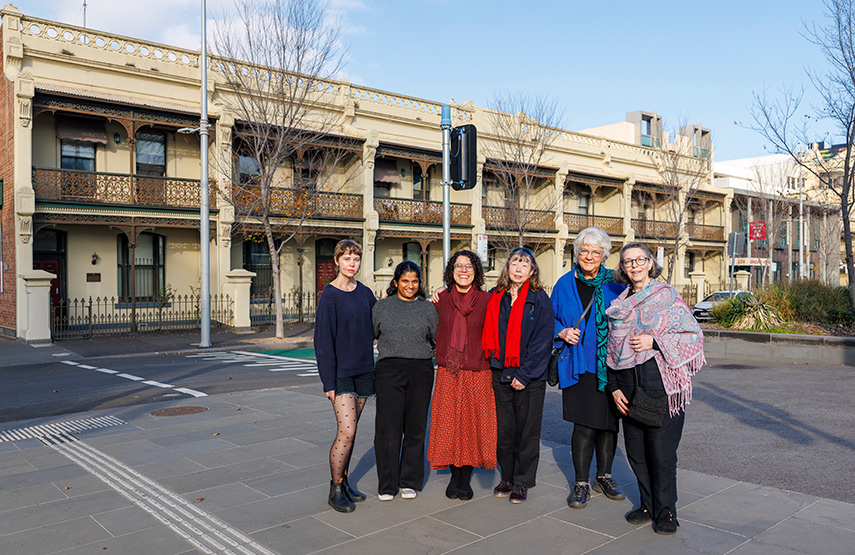
In 1962 it opened the first instalment of Graduate House – a row of seven connected terraces opposite the park in Leicester St known as Gladstone Terrace.
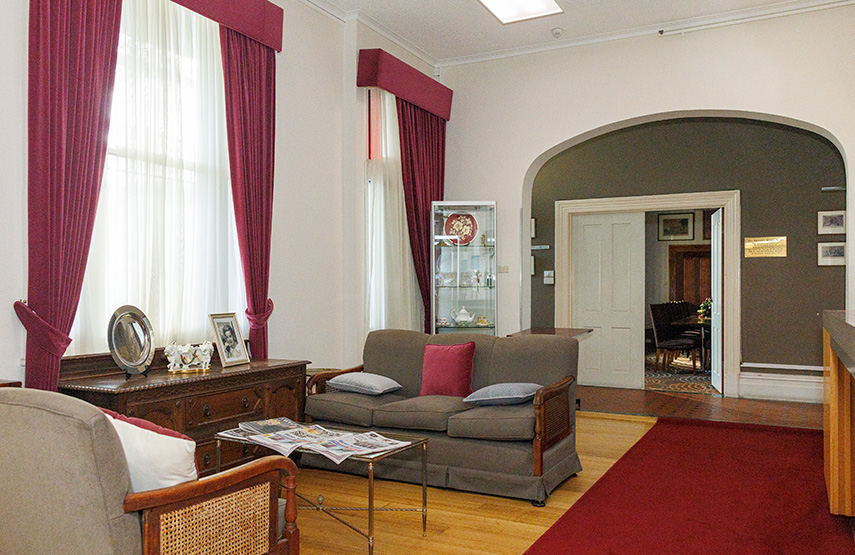
GU went on to acquire various adjacent and nearby properties, its real estate holdings nearly tripling in size, and its residential facilities expanding to include a dining room, bar, car park, garden, laundry, offices and function rooms, as well as increased accommodation.
It now has 145 rooms and hosts a range of lectures, meetings and events as well as public lunches.
Hosting regular lectures and events and accommodating not only students and researchers but also graduates who have moved into work and academia, the college has been a transformative place for many.
Playwright Jack Hibberd, Aboriginal activist Gary Foley and Reverend Tim Costello have been among those to give talks there.
Astrophysicist and Johns Hopkins University professor Colin Norman, who joined the GU in the 1960s, recently described the place as “exhibit[ing] an astonishing cross-pollination of ideas and cultures”.
“This fertile atmosphere has survived economic ups and downs, massive cultural shifts, and fierce political upheavals, and remains a strongly valued aspect of residential life at this great university," he said.
International student DS Magid, a long-term resident of the college, said it was a “brains trust” and “the lifeblood of the Graduate Union".
The first Edith knew about a proposal to close Graduate House was in an email that popped into her inbox in May containing FAQs for the coming annual general meeting.
At a special meeting in 2025 and in its two latest annual reports GU’s governing council had discussed how their efforts to pursue a redevelopment of the accommodation had morphed into a plan that would see Graduate House demolished and the land leased out to another entity.
However, the news had passed by many members.
DS Magid, who was aware of it, said there had been a lack of transparency from the governing council when it came to evidence for the need for their plan that “begins to look like a systematic disenfranchisement of the membership, at least over the past three years”.
In the FAQ email the closure of Graduate House was presented as fait accompli.
The Graduate Union was $12 million in debt, it said, and there were only two options to pay it off: either sell the organisation’s $40 million worth of property or “proceed with the Gladstone project” to lease the land out long-term for a new development.
“The Graduate Union is going to change. First and foremost, residential services … will likely cease at the end of 2027,” it said, noting that the ground lease arrangement would “flip the GU’s financial position from precarious to a more secure and stable state” and give it “a healthy investment fund”.
Edith had been vaguely aware of plans for a major redevelopment of Graduate House to improve the accommodation and increase capacity.
The email about closing it came as a shock and an outrage.
“I was like, ‘how dare they!’- at least in the way that they're doing it,” she said.
Many at Graduate House had similar feelings.
“Even the idea of just selling the whole thing without any warning or further discussion - we just felt a bit devalued,” Edith said.
The result has been the creation of the group Save the Graduate House Community, which is hoping to get the association’s rules changed to ensure that the governing council can’t take further action without first putting it to the membership.
Meanwhile the Save group members are planning an event to celebrate the anniversaries of the Graduate Union on July 14, 1911, and Graduate House on July 13, 1962.
At the very least there will be a cake, they say.
Asked if their opposition isn’t just a case of NIMBY-ism, Edith acknowledges that with the Graduate House buildings run down, the situation does need to change.
“And I certainly don’t think more student housing is a bad thing,” she says.
“It's just – who controls that student housing? Is it another private company or is it a charitable organisation that is actually actively creating a community, which is in my opinion, the most valuable thing?”
For Graduate House champion Magid, the proposal makes no sense at all.
“Without Graduate House, GU would be a very cash-heavy organisation that has forsaken its ideals and purpose," she said. •
Related Articles
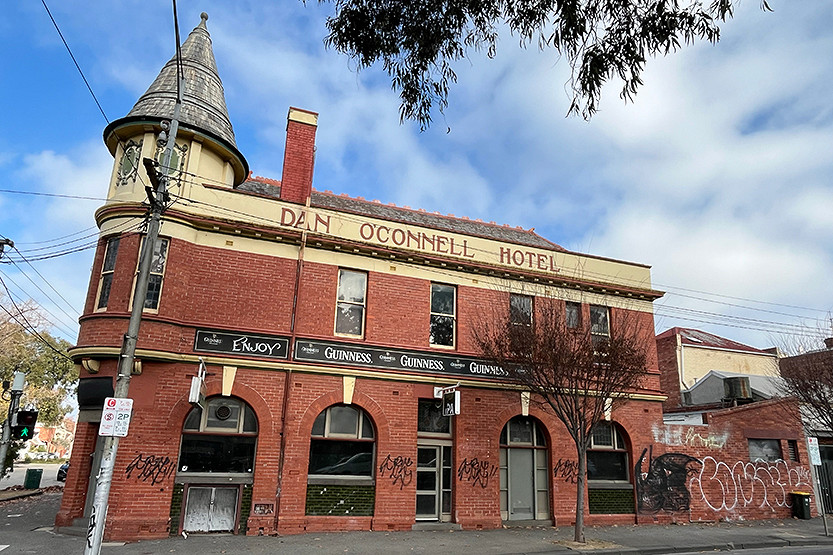
School plans for Carlton’s former Dan O’Connell Irish pub in doubt
The future of the former Dan O’Connell Irish pub as a primary school looks uncertain, with the planning permit for the hotel’s conversion set to expire in January while its owner is bogged down in investigations into allegations of abuse.
Read More
School warms its new “piano building” campus
Independent school Preshil has thrown “a housewarming party” at its recently acquired building at Lincoln Square South in Carlton.
Read More
Academy students take flight with Mary Poppins production
Students from the Academy of Mary Immaculate in Fitzroy have brought a touch of magic to the stage with their production of Mary Poppins, which began on May 20.
Read More
Farewell Inner City News – a short but meaningful chapter

Naughtons to toast 10 years under its current custodians
 Download the Latest Edition