From Carlton’s patchwork quilt to centre stage: celebrating Elle Morrell’s 10 years at CNLC
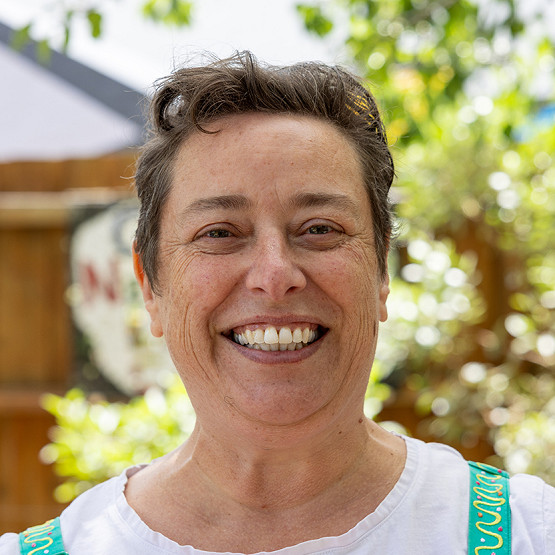
When Elle Morrell applied for a job at Carlton Neighbourhood Learning Centre (CNLC) 10 years ago, she had a confession to make, at least to herself.
“I thought I might be organising knitting groups and mahjong sessions,” she admitted with characteristic honesty. “I think many people don't appreciate all we do, and that every neighbourhood house is different.”
Elle arrived at CNLC with an unusual path behind her. She had spent most of her career in the environment and climate change sector, including a stint living and working in Arnhem Land, where something shifted for her.
She became interested not just in the environment itself, but in building community resilience and helping people thrive in the face of change. Her long-term ambition was to open her own migrant and refugee centre. Working at a neighbourhood house first seemed like good preparation.
In my three years working alongside Elle, I have come to know her as an ambitious big-picture thinker with deep connections into community. She always had one eye on the horizon and the other firmly on the people in front of her, and that combination is rarer than it sounds.
Carlton had been Elle's home since she was 17, and she saw its contradictions clearly.
“I came to call it the socio-economic picture of Carlton as a patchwork quilt,” she said.
Alongside wealthy residents and businesses, she saw real disadvantage and isolation. She noticed that while Carlton's Italian community had built roots and belonging over generations, a new wave of migrants was arriving to find those doors not yet open. Eritrean, Vietnamese, Chinese and Somali families, looking for a foothold in a new country.
That observation shaped a decade of work. One of Elle's proudest achievements was co-designing and opening Open Door, CNLC's satellite office at the bottom of Carlton's public housing towers, which at its peak served more than 3000 residents.
She also drove major environmental work on our grounds, including establishing a native bush food garden to bring Australian flora into the inner city, and led a significant partnership with the University of Melbourne to address digital inequity, distributing refurbished laptops and building digital literacy programs for community members experiencing disadvantage.
But it is often the human moments that stay with you. Elle still lights up talking about a group of Harari women who formed a catering business and partnered with King and Godfree to bring their menu to the rooftop bar.
“It was impressive to see how the women worked hard to make it a success,” she said. “Being welcomed into mainstream Australian culture while also promoting their own.”
That is community development in its truest form: invisible until it blooms.
It is all about listening and caring for people, Elle said. To identify innovative and practical outcomes that can change people's lives.
After 10 years, Elle is stepping into an entirely new world, theatre stage management. It is a bigger leap than it sounds, but knowing Elle, the skills will transfer seamlessly.
She spent a decade juggling programs, events, crises and community relationships, and she managed our much-loved Harmony Day festival with the kind of calm, behind-the-scenes mastery that theatre actually runs on. She is already thinking about how the arts can create change and improve lives, a question that feels very Elle.
“It has been an absolute privilege,” she said. “I feel like CNLC gave me lots of opportunities to follow my own direction. I will miss CNLC an awful lot.” •
Related Articles
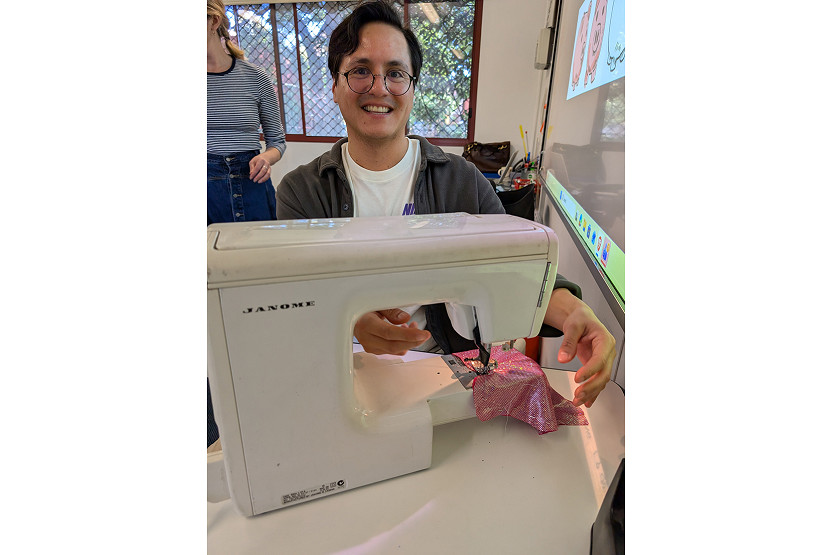
A cup of tea cannot be downloaded
Six years of my working life were spent in Aotearoa New Zealand campaigning against pokies with the Problem Gambling Foundation. What I learned sitting with people whose lives had been hollowed out by those machines has stayed with me.
Read More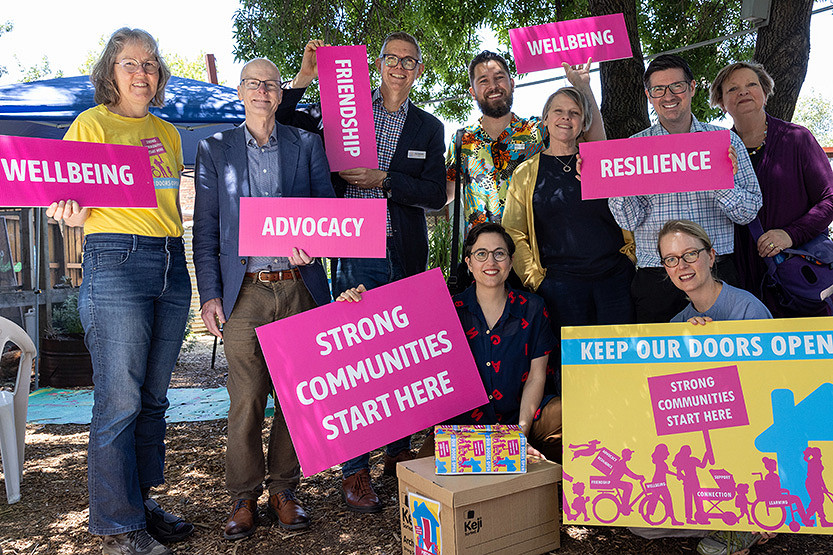
Why Neighbourhood Houses need fair funding to keep their doors open
On Thursday, December 11, more than 125 community members gathered at Carlton Neighbourhood Learning Centre for a simple but powerful act: handing over the voices of our community to their local representatives.
Read More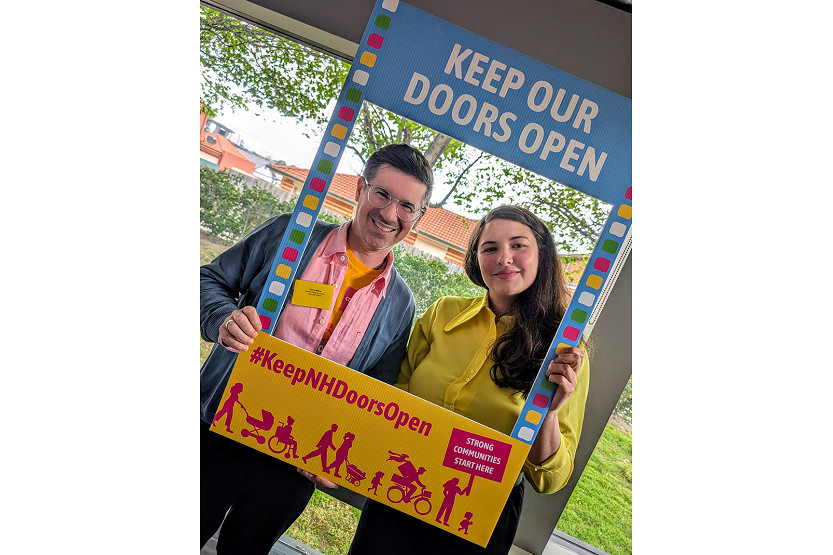
Keep our doors open: Why Neighbourhood Houses matter
Walk past Carlton Neighbourhood Learning Centre on any weekday morning and you’ll see what community looks like …
Read More
La Mama to launch three-month season of bold new works

Angelo Gargasoulas sentenced on drug crimes
 Download the Latest Edition