Calls grow for a master plan to guide Lygon Street’s next chapter
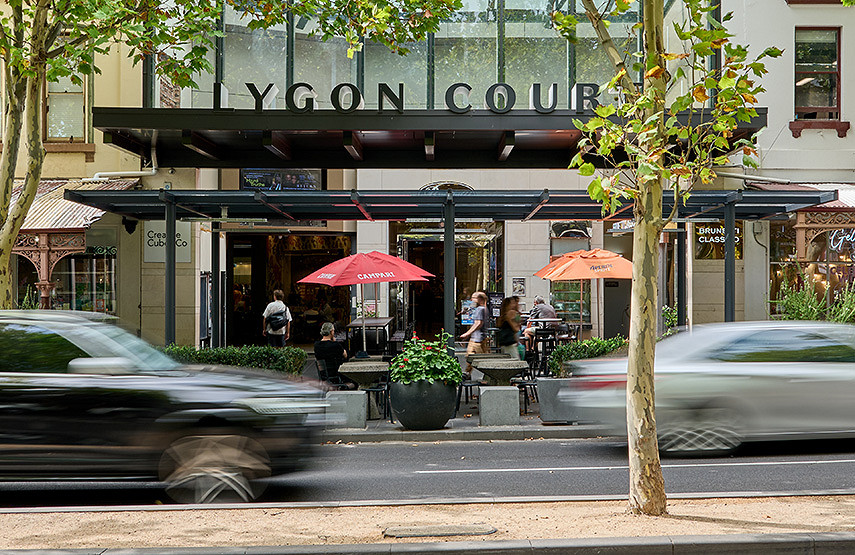

The idea of a long-term master plan for Lygon St is gaining momentum, with traders, residents and civic leaders increasingly converging around the view that Carlton’s most iconic strip needs a coordinated strategy to secure its future.
The latest support has come from Carlton Inc. president Sergio Alderuccio, who used his recent appearance on the Future Melbourne podcast to argue that Lygon Street’s identity had “eroded” in recent years and that a unified strategic plan was now needed to help restore it.
“I feel that a lot of Lygon St’s identity has eroded, been diluted over the last few years, and we need to work to restore that,” he said.
It does need a unified strategic plan.
Mr Alderuccio said any such plan would need input from traders, residents, community organisations and the City of Melbourne, and would have to strike a careful balance between preserving the strip’s heritage and making it more attractive to a broader audience.
He pointed to the need to improve the streetscape, create more continuity and explore more activations, public art and potentially traffic changes to make the street more pedestrian-friendly.
“It just has no resemblance to a European streetscape at all,” he said. “There’s uneven footpaths, different paths, different awnings. There’s just no continuity in the strip.”
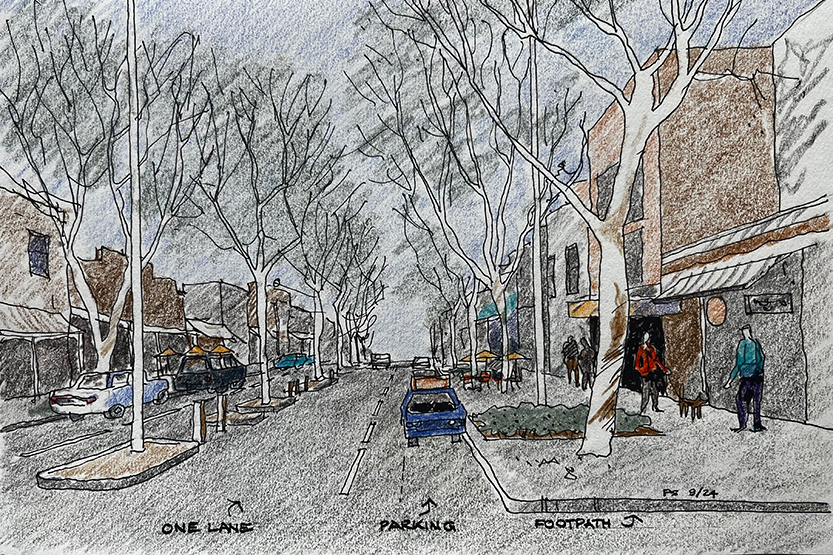
Carlton Residents' Association's streetscape vision for Lygon St.
The comments echo growing calls in recent years from the Carlton Residents’ Association, which has also pushed for a coordinated action plan to revive Lygon St. In its April column in Inner City News, the CRA argued that while the street remained lively and attractive, it needed a long-term plan to address through traffic, noise, inconsistent parklets and a lack of integrated public realm improvements.
CRA member Peter Sanders this month reiterated that point, saying the strip “needs a boost” and calling on the council to work with Carlton Inc. and others to prepare an action plan.
The significance of the current moment lies in the fact that key stakeholders increasingly appear aligned around the idea that Lygon St needs more than piecemeal improvements.
Carlton Inc. has been instrumental in driving some of that thinking. The trader group has recently helped bring the monthly Lygon Street Market to Argyle Square and is also in discussions about reviving the much-loved Lygon St Festa, both signs of a renewed appetite for activation and coordinated placemaking.
But the longer-term issues remain clear. One of the enduring challenges for Lygon St has been the disconnect between its quieter southern end, broadly from Queensberry to Grattan streets, and the more active northern section around Faraday St, Lygon Court, King and Godfree, and Readings. Bridging that gap, physically, visually and commercially, would almost certainly be a central task of any future master plan.
Lord Mayor Nick Reece has signalled support for the broader conversation. In comments to Inner City News, he said Lygon St was undergoing a “renaissance” as a food and cultural destination and noted that people were spending more at Carlton restaurants than in 2019.

“Lygon St is undergoing a renaissance as an institution for food and culture – backed by the City of Melbourne and local businesses,” the Lord Mayor said.
“Events like the Argyle Square market, monthly Lygon Street Market, Carlton Writers’ Festival and the Melbourne Italian Festa are major drawcards – with the latest data showing people are spending more at Carlton restaurants than in 2019.”
“New bluestone paving has transformed the south end of Lygon St, and more works are under way – making it easier to walk around and visit local restaurants and retailers.”
Cr Reece has also posed a more pointed question about the strip’s future retail mix, asking: “why are there no fruit and veg grocers on Lygon St?”
That remark goes to the heart of another emerging issue: not just how the street looks, but what kinds of businesses it attracts and retains.
The City of Melbourne says it is already investing in the area through bluestone footpath upgrades, activations, expanded Community Safety Officer coverage and new CCTV cameras installed in response to trader feedback.
In late April, the council began works to replace the asphalt footpath with bluestone on the western side of Lygon St, between Queensbury St and Argyle Place South. Last year, the eastern side, between Queensbury and Pelham streets, was also upgraded.
The council added that in 2025, a total of 10 permits were issued across Piazza Italia and Argyle Square South, supporting events on Lygon St through its Event Partnership Program and annual Christmas Festival activations. It also noted that on occasion, fees had also been waived to support activity in Argyle Square, including for a Grand Prix activation in 2025.
Still, many now see those measures as only part of the answer.
Mr Alderuccio said discussions were already taking place informally between Carlton Inc., the CRA and others, including architects interested in the street’s future, and that momentum was building towards a more unified push.
“I think we’re very close to coming together and being more united and then certainly going to the City of Melbourne with that,” he said.
For a street as important to Melbourne’s cultural identity as Lygon St, that next step could prove significant. After decades of gradual change, the question is no longer whether the strip should evolve, but whether it can do so with a clearer shared vision. •
Related Articles
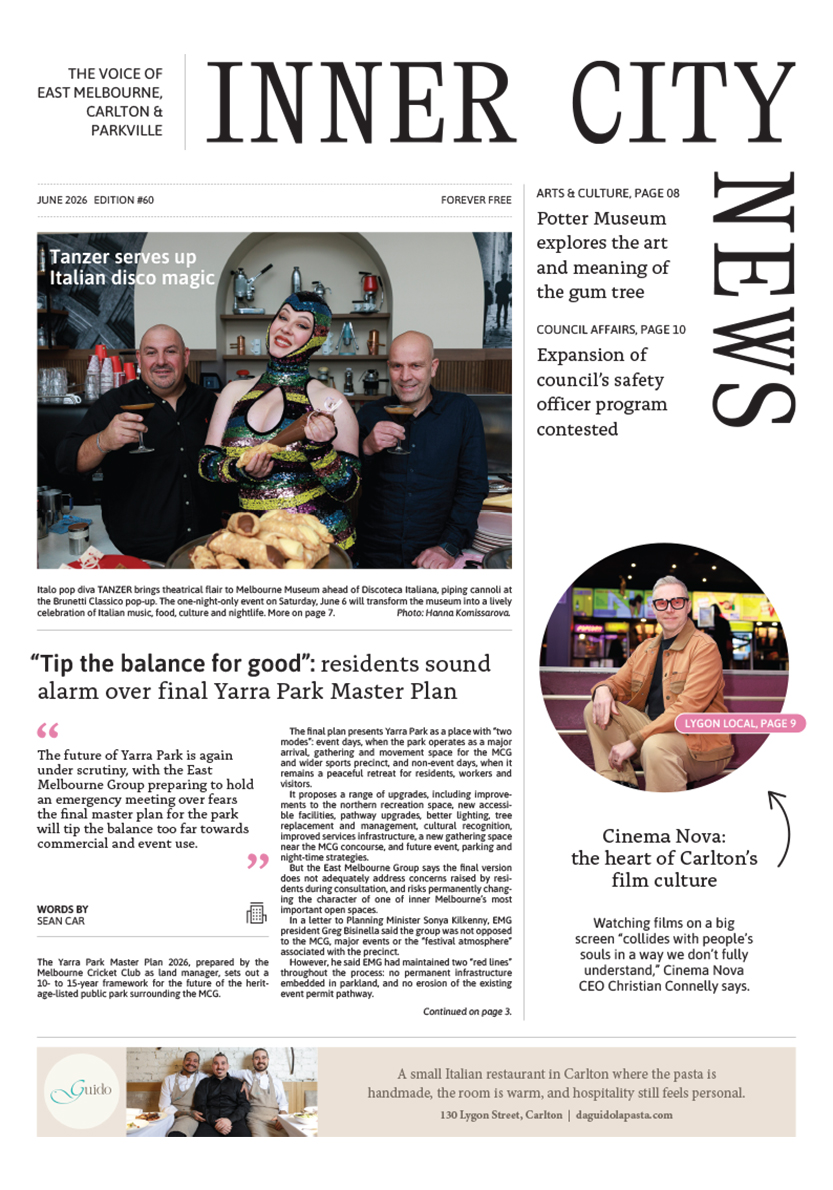
“Tip the balance for good”: residents sound alarm over final Yarra Park Master Plan
The future of Yarra Park is again under scrutiny, with the East Melbourne Group preparing to hold an emergency meeting over fears the final master plan for the park will tip the balance too far towards commercial and event use.
Read More
Council backs St Nicholas Church redevelopment in East Melbourne
The City of Melbourne has approved a long-running planning application for St Nicholas Antiochian Orthodox Church in East Melbourne, giving the green light to a heritage-sensitive redevelopment.
Read More
RMIT maps out a more flexible future for its campuses with new Living Places Plan
RMIT University has launched a new long-term framework to guide how it evolves its campuses, setting out a broader vision for the future of its spaces at a time when the institution is thinking more deeply about its place in Melbourne and the communities around it.
Read More
La Mama to launch three-month season of bold new works

Angelo Gargasoulas sentenced on drug crimes
 Download the Latest Edition