“Athens on the Yarra”
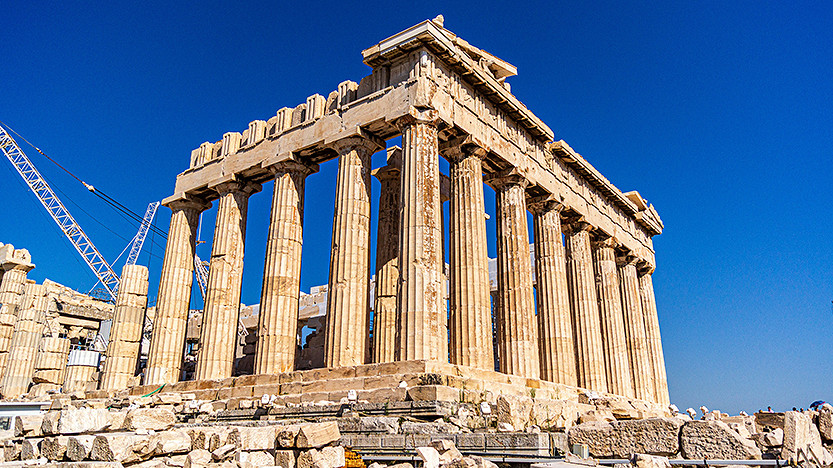
In the recently released City of Melbourne report on the 2050 Summit our democratic heritage is described as “Athens on the Yarra”.
The report is littered with similar hyperbole, misinformation and a lack of clarity on the powers, the role and responsibility of the Melbourne City Council in the governance of the City of Melbourne. The future remains blurred despite the participation and commitment of many from the city and no doubt from across metropolitan Melbourne.
The 2050 Summit report conflates the obvious distinction between the City of Melbourne with a projected population of 290,000 and the metropolitan region of Melbourne with a projected population of nine million. Is this a slip of the pen or an ongoing marketing of “Brand Melbourne” by the City of Melbourne?
The Summit took place as a result of an election promise that brought with it no detail and was signed off with a lack of council oversight of the agenda, and importantly, its value to the City of Melbourne in addressing current and future issues and priorities together with its governance.
The powers of the Melbourne City Council as proscribed in the City of Melbourne Act are limited and were never addressed. Its representational role set out in the electoral provisions of the Act were buried beneath the lanyards and presentations by invited luminaries.
The electoral provisions proscribe a bias toward a CBD council at the expense of residents through a two for one gerrymander in favour of non-resident property owners and business, postal voting only, no wards and no limits or real time disclosure of election funding and the election of the Lord Mayor through a popular vote and not by the council. The council has subsequently called for a review of the electoral provisions of the City of Melbourne Act and its democratic underpinnings by the state government.
However, the review requested is so limited it is unlikely to address the need to democratise the electoral provisions and lead to transparency, local representation and accountability. At best it will result in a band aid response.
The Lord Mayor has described the request as “neutral”. The democratic underpinnings of the council are fundamental to engaging the community on a 2050 vision.
The summit participants were not provided with information on the City of Melbourne’s jurisdictional role as a city government municipality, no context in relation to metropolitan Melbourne and the 30 city councils that have jurisdiction, no context in relation to its resident population demographics nor of its non-resident property ownership and businesses that operate in the City of Melbourne.
There was also no context in relation to the priorities identified by the summit as to the current role of the City of Melbourne and the outcomes achieved to date, nor its collaborative or cooperative role with other metropolitan city councils, the state government and federal government. Many of the priorities are not within its jurisdictional powers and are priorities that are needing to be addressed by other levels of government if they are to be advanced or achieved at all.
The Melbourne City Council summit failed to be an honest broker on its role and responsibilities including the urgent need for its reform and for metropolitan Melbourne to have a governance structure much like the Greater London Council. We can then establish a City of Melbourne vision that reflects its core role and responsibilities along with all other 30 metropolitan cities and with a Greater Melbourne Council for metropolitan Melbourne, empowered to achieve priorities for all Melburnians. •
Related Articles
Heritage lottery
Three weeks ago, on Saturday, May 9, there was a wonderful celebration of the 125th anniversary of the opening of Australia's Federal Parliament.
Read More
Carlton’s future in the balance
The Carlton Residents’ Association (CRA) has decided to be proactive in promoting issues that will protect and improve Carlton.
Read More
The future of Lygon St is no laughing matter!
The Carlton Residents’ Association (CRA) has had a long-standing interest and involvement in Lygon St as the activity spine of the Carlton community.
Read More
La Mama to launch three-month season of bold new works

Angelo Gargasoulas sentenced on drug crimes
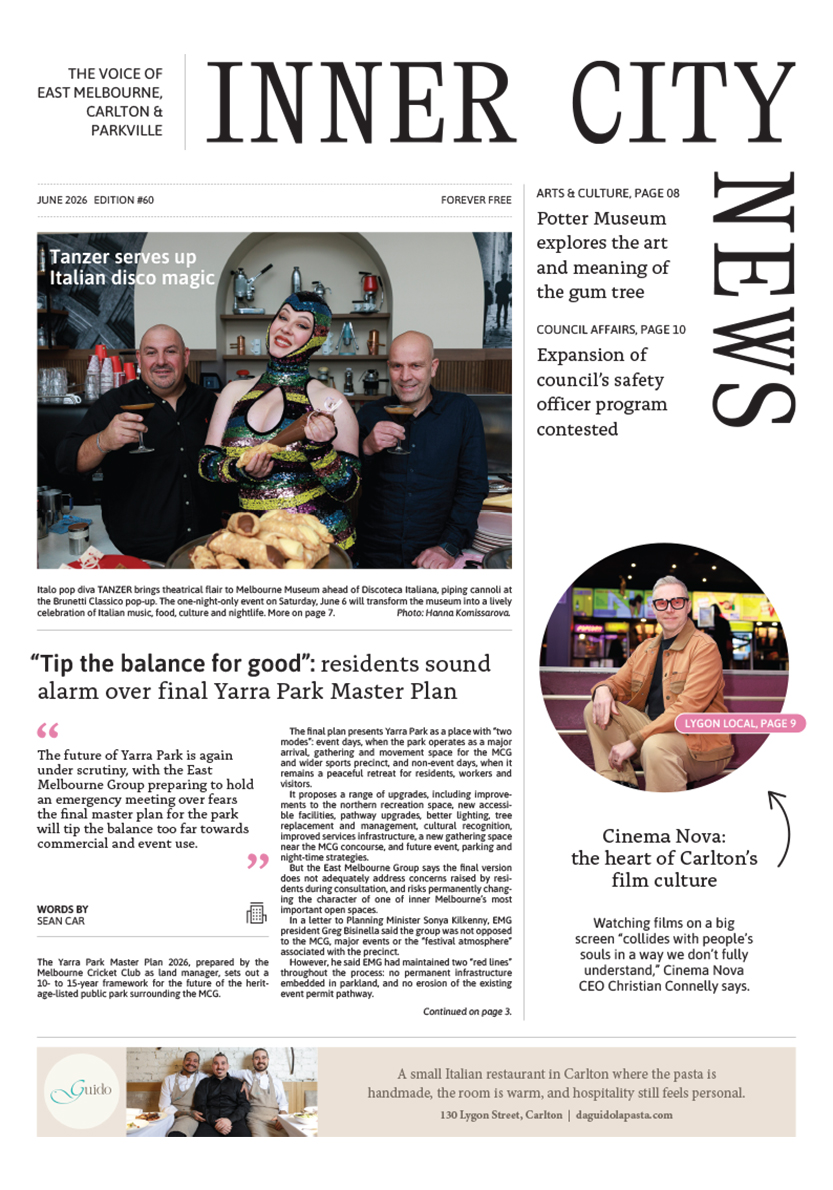 Download the Latest Edition