After 30 years, Dave Sweeney steps away from ACF
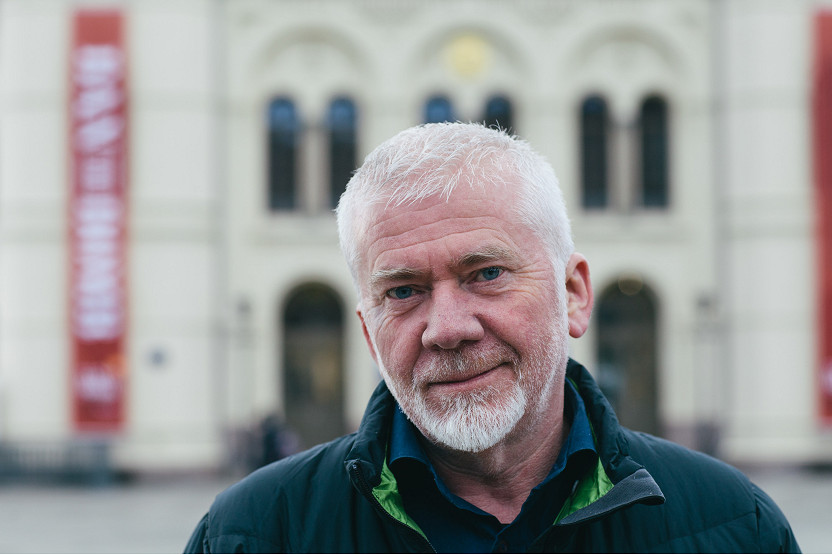
In 1996, Dave Sweeney took a six-month job at the Australian Conservation Foundation to campaign against uranium mining. Thirty years later, he is finally stepping away from the Carlton-based organisation – with a Nobel Peace Prize and a Member of the Order of Australia under his belt.
Dave wasn’t going to travel to Oslo for the 2017 award ceremony, but his son Mungo helped change his mind.
“Hey Dad, how many Nobel prizes are you going to win?” the 11-year-old asked, prompting Dave to reassess and pack his bags.
The nuclear-free campaigner was a founding member of the International Campaign to Abolish Nuclear Weapons (ICAN), which in 2017 saw its work rewarded with the United Nations’ adoption of a weapons treaty and the Nobel Peace Prize.
Initiated in Melbourne in 2007 – and launched at State Parliament by Malcolm Fraser – ICAN has grown into a network of grassroots non-government organisations across more than 100 countries.
The Treaty on the Prohibition of Nuclear Weapons has now been signed by more than half the nations of the world – though not Australia.
The idea had been “to do something” in the face of the nine declared nuclear weapons states.
That something was to “make absolutely crystal clear that these weapons are vile”.
The treaty, as much a “cultural and ethical instrument” as a legal one, has the practical effect of delegitimising institutional investment in nuclear weapons corporations, Dave said.
In Oslo, an extraordinary gathering of “ICAN people from around the world” had assembled.
Formal proceedings in the Norwegian capital included a dinner and a “ceremony with the Norwegian king and royal family, and trumpets blaring”.
Then came days of community celebrations involving a torchlight street parade, parties, dancing and “rolling from one bar to another”.
A global media blitz focused on the significance of the issue.
“That surprised me because it hadn’t been such a big deal here at home,” Dave said.
Among those present were “a lot of Japanese hibakusha – old people who’d survived Hiroshima or Nagasaki – who were crying and thanking us for putting the issue on the map”.
Returning home heartened, the ICAN Australia team brought with them a gold medal that has since “spent a lot of time around Carlton”.
As well as being displayed at ACF and Victorian Trades Hall, where ICAN is based, the medal has been shown in libraries and schools, travelled the country in backpacks and “been passed around bush meetings in regional Australia”.
“ICAN Australia has very much got a view that this is the people’s medal,” Dave said.
It was ordinary folks getting together collectively to try and pull off something pretty extraordinary, and we are actually, you know, on the way.
A cheque for $US1 million, also part of the prize, was divided among the groups, with larger shares going to those most in need.
The medal is now housed at Melbourne Town Hall as a symbol of the City of Melbourne’s commitment to the Treaty on the Prohibition of Nuclear Weapons.
Melbourne is one of 50 councils around Australia calling for the federal government to sign the Treaty, Dave said.
This is urgent, according to the campaigner, in light of AUKUS arrangements which, following the recent expiry of the US-Russian nuclear arms reduction treaty, look set to see Australia host six B-52 bombers and four US nuclear submarines retrofitted to be nuclear weapons-capable.
AUKUS is one of several issues he intends to pursue in the next phase of his life, while he has still “got a bit of run in the legs”.
It was in 1996, in the wake of John Howard’s election, that Dave took on a six-month job at ACF to work on uranium issues in the Top End.
One of the new government’s key policies was to remove constraints on mining the metal, and “the first cab off the rank” was the proposed Jabiluka mine inside the World Heritage-listed Kakadu National Park.
The successful campaign against the project would last years and draw thousands of protesters to Mirrar country.
Dave’s job, meanwhile, “very rapidly expanded to all things nuclear”.
Over the decades, it has involved opposing uranium mining, campaigning against “the failure to responsibly manage radioactive waste” and countering “consistent attempts” to establish a national radioactive waste dump on remote Aboriginal land.
He has worked on the rehabilitation of sites affected by mining and weapons testing, as well as alternative energy options and promoting “how preferable a renewable future is to a radioactive one”.
In 2025, the fight against Peter Dutton’s “referendum on nuclear power”, which resulted in a landslide Coalition election defeat, was “almost the swan song” of his ACF career, he said.
It was also the year he was appointed a Member of the Order of Australia “for significant contribution to nuclear-free campaigning and First Nations advocacy”.
Stepping away from his job at ACF after 30 years, it is not the medals by which the campaigner judges himself.
“We’ve made a difference in this, it’s been positive,” he said.
“I’ve made deep connections and friendships and I think contributed to this country being a bit more respectful, a bit more thoughtful and a bit safer and cleaner than it might otherwise have been.”
At a farewell event at Brunswick’s Quad Club in July, where Peter Garrett was in the crowd and ACF boss Adam Bandt was on the decks, the packed room heard speech after speech expressing awe and appreciation for the veteran campaigner.
Tributes celebrated his “bush to boardroom and campfire to Canberra” skill set, his many achievements and adventures, and his unfailing generosity towards colleagues, allies, friends and even foes. •
Related Articles
Carlton pastry chef earns global recognition
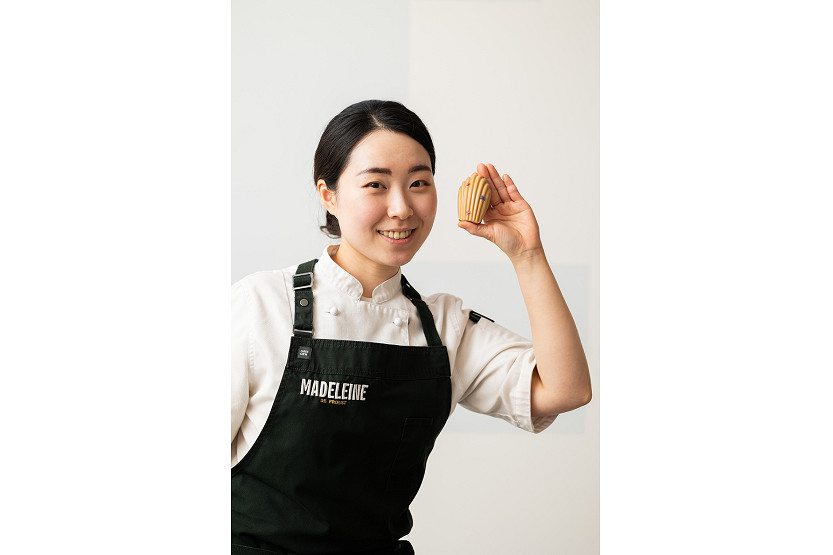
Carlton-based pastry chef Hyoju Park has been recognised as one of the world’s most promising pastry talents, receiving La Liste’s Pastry Talent of the Year award.
Read More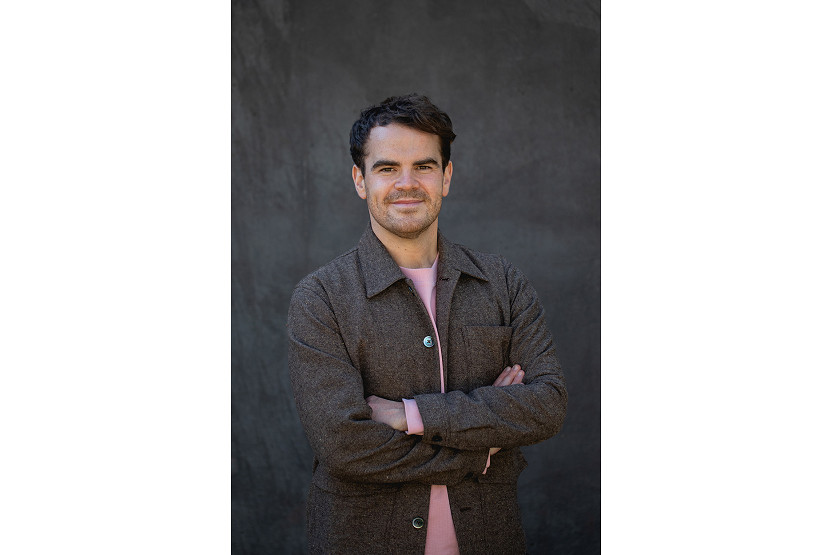
Young writer found vocation in family history project
Carlton writer and Triple R presenter Jonathan Butler, who has published a true crime family history, is appearing in two events at the Melbourne Writers Festival next month.
Read More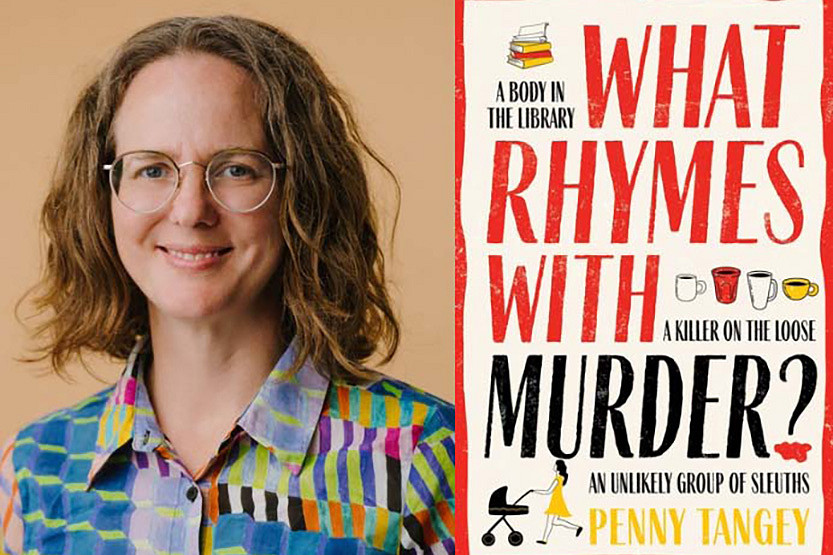
East Melbourne provides the perfect setting for Penny Tangey’s debut adult book
Penny Tangey’s humorous cosy crime novel is ready to hit the shelves on February 24.
Read More
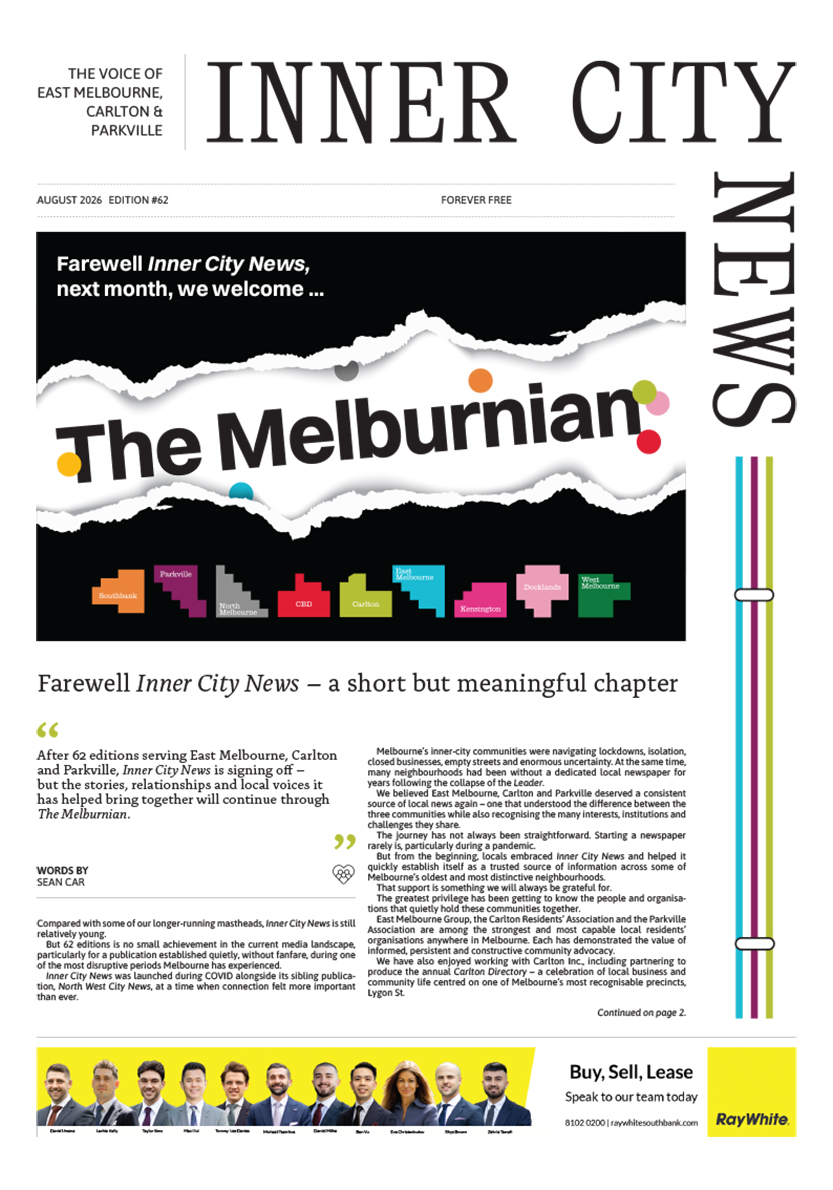
Farewell Inner City News – a short but meaningful chapter
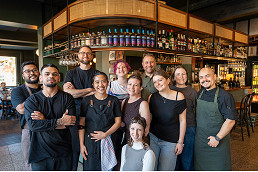
Naughtons to toast 10 years under its current custodians
 Download the Latest Edition